Spanish
  Chinese
  Russian
  German
  French
  Japanese
  Portuguese
  Hindi
Hindi Research Article, J Plant Physiol Pathol Vol: 13 Issue: 3
Survey and Molecular Identification of Tilletia indica for Promotion of International Trade of Wheat from Meerut Division India in the Regime of WTO-SPS Agreement
Satyendra Kumar Vishwakarma1, Ramesh Singh1*, Shashank Shekhar1, Pankaj Singh1, Prashant Mishra1, Hem Singh2, Manoj Kumar Yadav3 and Amit Kumar Yadav4
1Department of Plant Pathology, Sardar Vallabhbhai Patel University of Agriculture and Technology, Meerut, UP, India
2Department of Entomology, Sardar Vallabhbhai Patel University of Agriculture and Technology, Meerut, UP, India
3Department of Agricultural Biotechnology, Sardar Vallabhbhai Patel University of Agriculture and Technology, Meerut, UP, India
4Department of Agriculture, Banda University of Agriculture and Technology, Banda, UP, India
- *Corresponding Author:
- Dr. Ramesh Singh
Department of Plant Pathology, Sardar Vallabhbhai Patel University of Agriculture and Technology, Meerut, UP, India
E-mail: rameshsingh@svpuat.edu.in
Received: 27 September, 2024, Manuscript No. JPPP-24-148968; Editor assigned: 30 September, 2024, PreQC No. JPPP-24-148968 (PQ); Reviewed: 15 October, 2024, QC No. JPPP-24-148968; Revised: 13 June, 2025, Manuscript No. JPPP-24-148968 (R); Published: 20 June, 2025, DOI: 10.4172/2329-955X.1000412.
Citation: Vishwakarma SK, Singh R, Shekhar S, Singh P, Mishra P, et al. (2025) Survey and Molecular Identification of Tilletia indica for Promotion of International Trade of Wheat from Meerut Division India in the Regime of WTO-SPS Agreement. J Plant Physiol Pathol 13:3.
Abstract
Wheat (Triticum aestivum L.) is the staple food crop of millions of people in the world. India has the maximum wheat production after China. It contains 21 and 20 percent of the protein and food calories, respectively, to the human diet of the 94 developing countries of more than 4.5 billion people. In the international market, Indian wheat is preferred due to its high gluten content and golden-brown grains. Among all the diseases of wheat, Karnal Bunt (KB) or partial bunt incited by Tilletia indica (Mitra), earlier named Neovossia indica (Mitra), Mundkur is presumed to be native of Indian origin. Karnal bunt is an important wheat disease with implications for wheat grain quality and inflicts changes in the chemical composition of infected grains. Karnal bunt is also a disease of quarantine importance, and it affects the international trade of wheat and the movement of germplasm. Infection occurs in only a few seeds per head and not all heads on a single plant. Infected grains are partially or completely converted into bunt sori. On germination, teliospores produce secondary allantoid sporidia, which, on fusion, establish successful infection of the ovary of spike. Contamination levels of more than 0.5% prohibit export/ import of wheat; 1% affect quality and palatability due to a displeasing fishy odor and black discoloration, thus bringing down its quality and palatability. More than 3% of infected seeds in a wheat lot render it completely unfit for human consumption, leading to economic losses to the producer countries. To know the status of disease, a post-harvest survey was conducted during 2021-2022 and 2022-2023 in 45 blocks of Meerut division. Samples collected from 30 blocks were found to be positive, while the remaining 15 blocks were observed to be negative. All presumptive samples of four districts (Meerut, Bulandshahar, Hapur and Baghpat) were found to be positive during molecular identification (RT-PCR and PCR amplification).
Keywords: Triticum aestivum, Presumptiv, Tilletia indica, Teliospore
Introduction
Within agriculture, on a global scale, wheat (Triticum aestivum L.) is the most important single product cultivated both as a food and source of income in many countries of the world. This observation also explains the role that wheat plays in geopolitics. It is the staple food and major source of energy and nutrition of Indian diet. It is known for its remarkable adoption to a wide range of environment. Its importance derived from the properties of their glutin, cohesive network of tuft endosperm protein and starch. Wheat crop is exposed to many biotic and abiotic stresses during its lifecycle. Among all biotic stresses, karnal bunt (Tilletia indica) is a fungal pathogen causing Kernal bunt of wheat seeds. Karnal bunt or partial bunt, caused by Tilletia indica (Mitra) Mundkur, is one of the smut diseases of wheat. Total losses in India during severe epidemics have been around 0.3 to 0.5 percent with incidence as high as 89 percent in some fields [1]. Karnal bunt is considered the disease of quarantine importance and affects the quality and economic losses [2]. Thus, presence of diseased grain in wheat lots can cause economic loss to wheat exporting countries. Therefore, it is important to find out the incidence and its efficacy on seed quality. The present study was planned to assess the status of Karnal bunt and to find out comparatively disease free or less disease prone areas in Western Uttar Pradesh, so that wheat free from Karnal bunt disease can be produced and exported. The European and Mediterranean Plant Protection Organization (EPPO/EOEPP) has imposed several standards for regulating diseases in the international trade. In 1995, European and Mediterranean Plant Protection Organization (EPPO) prepared a list of 46 A1 quarantine organisms including T. indica. Kehlenbeck, Motte, and Unger, 1997 have analyzed the risk of introduction of T. indica to Germany and have also pointed to the risk of contamination of seeds from grain that has previously been stored in the same premises. The EPPO has amended standards for Karnal bunt in its diagnostics protocols for regulated pests which are intended to be used by national plant protection organisations in respective countries, in their capacity as bodies responsible for the application of phyto-sanitary measures to detect and identify the regulated pests of the EPPO and/or European Union lists.
In order to limit the transmission of the pathogen to disease free areas, transportation of infected/infested seed from the disease prone areas has been restricted. To meet the requirement, the central seed certification board has formulated strict seed certification standards. To limit the dispersal and build-up of KB infection, tolerance limits (certification standards), based on visual inspection, is applied to foundation and certified seeds i.e., a maximum of 0.05% for foundation seeds and 0.25% for certified seeds. In order to limit the transmission of the pathogen to disease free areas, transportation of infected/infested seed from the disease prone areas has been restricted.
To meet the requirement, the central seed certification board has formulated strict seed certification standards. To limit the dispersal and build-up of KB infection, tolerance limits (certification standards), based on visual inspection, is applied to foundation and certified seeds i.e., a maximum of 0.05% for foundation seeds and 0.25% for certified seeds.
Materials and Methods
To find out the incidence of Karnal bunt in Western Uttar Pradesh, a comprehensive post-harvest survey was conducted in collaboration with government authorities 45 blocks of 06 district of Meerut division, Western Uttar Pradesh. Five villages were randomly selected from wheat cultivated area of each block of each district and 200-gram sample were collected from five farmers of every selected villages during the year 2021-22 and 2022-23. The collections of samples were done in labeled paper bags to indicate locations, number, date of collection and varieties name. Surveyed samples were brought to the Laboratory of Centre of Excellence for Sanitary and Phytosanitary (SPS), Department of Plant Pathology, Sardar Vallabhbhai Patel University of Agriculture and Technology, Meerut, Uttar Pradesh for analysis of Karnal bunt incidence. Karnal bunt infected seeds were detected by visual (Hand lens) and microscopic (Olympus) observations. The infected seeds were counted and seperated form healthy seeds.
After laboratory analysis the percent incidence of Karnal bunt infected seeds were calculated by following formula:
% Disease incidence=(Number of infected seed)/(Total number of seed) × 100
District and variety wise observations were recorded on average infection as suggested by Beniwal et al.
Confirmation of Karnal bunt pathogen was determined by species specific primers in PCR and RT-PCR on the basis of Diagnostic Protocol (DP4) of International Standard for Phytosanitary Measures (ISPM 27).
DNA extraction from T. indica culture
Genomic DNA was isolated from fungus mycelia mat, 10-15 days old culture by the Cetyl trimethyl Ammonium Bromide (CTAB) method [3] with some modifications.
Agarose gel electrophoresis of extracted DNA
The frame for the gel-casting unit was cleaned and sealed with a tape to form a mould. The frame was placed on a flat platform to ensure a flat and level base; the comb was then positioned parallel to the open edge of the frame about 2 mm above the surface. Agarose was boiled to dissolve in 1X TAE buffer in a microwave oven till the agarose was completely dissolved. It was cooled to about 45°C with constant stirring. Ethidium bromide was added to a final concentration of 0.5 μg/ml buffer. Then the agarose solution was poured into the gel plate with combs fixed in the gel caster. Gel was allowed to solidify for about 30 min, combs were removed carefully and gel was kept submerged in an electrophoresis buffer tank containing 1X TAE buffer. 10 μl of the DNA was mixed with 5 μl of (6X) loading dye and loaded to the wells of submerged gel using a micropipette. The electrophoresis apparatus connected to the power supply and electrophoresis was carried out at 50 V for 45 minutes or up to deep blue dye migrated to the reaches three-fourth of the gel. The gel photograph was visualized on UV trans-illuminator using Gel Documentation (UVI Tech. Cambridge).
Amplification of Tilletia indica DNA
RT-PCR amplification
Composition of reaction mixture shows in Table 1.
| Component | Volume |
| Template DNA | 1.0 µl |
| Primer F | 1.0 µl |
| Primer R | 1.0 µl |
| Syber green | 12.5 µl |
| Nuclease free water | 9.5 µl |
| Total | 25.0 µl |
Table 1: Composition of the qPCR reaction mix (Total volume: 25 μl).
Small reaction tubes, usually containing 25 μl of above reaction volume, were used to carry out the PCR. A gentle shake was used to mix the contents of the tube uniformly. Prevent from creating bubbles, the tube was set inside a thermal cycler, which alternately heated and cooled its reaction tubes to the precise temperatures required for every step of the process [4].
Amplification of genomic DNA was done by using species specific primer in real Time-Polymerase Chain Reaction (PCR) was performed in a 96 well RT-PCR plate in CFX ConnectTM Real Time System (Bio- Rad) using the following steps in consonance with Diagnostic Protocol (DP4) of International Standard for Phytosanitary Measures (ISPM 27) (Table 2).
Forward primer Tin 3 (5′-CAA TGT TGG CGT GGC GC-3′)
Reverse primer Tin 10 (5′-AGCTCCGCCTCAAGTTCCTC-3′)
| Name of step | Temperature | Time | |
| Initial denaturation | 95°C | 10 min | 34 cycles |
| Denaturation | 95°C | 15 sec | |
| Annealing/Extension | 50°C | 2 min |
Table 2: Thermal cycling conditions for qPCR amplification.
The PCR amplified products were stored at -20°C for further use.
PCR amplification
Composition of reaction mixture shows in Table 3.
| Component | Volume |
| Template DNA | 1.0 µl |
| Primer F | 1.0 µl |
| Primer R | 1.0 µl |
| Master mix | 12.5 µl |
| Nuclease free water | 9.5 µl |
| Total | 25.0 µl |
Table 3: Composition of the PCR reaction mix (Total volume: 25 μl).
Amplification of Tilletia indica was determined using species specific primers Tin3/Tin4 and MK56/TilletiaR in PCR (BIORAD T 100 TM Thermal Cycler) in consonance with Diagnostic Protocol (DP4) of International Standard for Phytosanitary Measures (ISPM 27) (Tables 4 and 5).
Forward primer Tin 3 (5′-CAA TGT TGG CGT GGC GC-3′)
Reverse primer Tin 4 (5′-CAA CTC CAG TGA TGG CTC CG-3′)
| Name of step | Temperature | Time | |
| Initial denaturation | 94°C | 1 min | |
| Denaturation | 94°C | 15 sec | 25 cycles |
| Annealing | 63°C | 15 sec | |
| Extension | 72°C | 15 sec | |
| Final extension | 72°C | 6 min |
Table 4: Thermal cycling conditions for PCR amplification.
MK56 (5’-GTA GGT GAA CCT GCG GAA GGA TCA TT-3′)
Tilletia-R (5’-CAA GAG ATC CGT TGT CAA AAG TTG-3′)
| Name of step | Temperature | Time | |
| Initial denaturation | 95°C | 3 min | |
| Denaturation | 94°C | 20 sec 30 sec 30 sec |
20 cycles |
| Annealing | 63°C | ||
| Extension | 72°C | ||
| Final extension | 72°C | 10 min | |
Table 5: Thermal cycling conditions for PCR amplification.
Amplified products were stored at -20°C. If visualizing on a gel, 10 μl reaction products is loaded with a suitable marker and run on a 2% agarose gel and photographs were taken by gel documentation system [5].
Results and Discussion
Karnal bunt incidence were observed district wise in year 2021-22 and 2022-23. During both the years we observed, the maximum incidence of Karnal bunt was recorded in 0.304% in Hastinapur block followed by 0.174% in Parikshitgarh block and minimum incidence was recorded in 0.018% in Sardhana block and five blocks (Kharkhaunda, Saroorpurkhurd, Rohta, Machhara and Pajpura) were found 0.00% incidence of Meerut district in the year 2021-22. While in the year 2022-23 the maximum incidence was recorded 0.114% in Machhara block followed by 0.036% in Parikshitgarh block and minimum incidence was recorded in 0.002% in Janikhurd block and three blocks were found 0.00% incidence. Similar kind work was done by Jakhar et al. in 2019, he conducted survey in 11 districts of northern Haryana to access the status of Karnal bunt and maximum average infection was found in Karnal district (0.413%) and the minimum was recorded in Sirsa (0.012).
Whereas in Baghpat district the maximum incidence of Karnal bunt was recorded in 0.0.090% in Baraut block followed by 0.031% in Baghpat block and minimum incidence was recorded in 0.015% in Khekra block and one block (Chhaprauli) were found 0.00% incidence in the year 2021-22. While in the year 2022-23 the maximum incidence was recorded 0.0.074% in Baraut block and minimum incidence was recorded in 0.022% in Baghpat block and four (Chhaprauli, Pilana, Khekra and Binauli) blocks were found 0.00% incidence %. Jakhar and Punia also revealed the similar result out of 1713 samples, only 289 samples (16.87%) were found infected with Karnal bunt. The maximum percentage of infected samples was found in Yamuna Nagar (34.61%) followed by Karnal (27.13%), whereas minimum percentage was in Jind (10.14%) [6].
While in Hapur district the maximum incidence of Karnal bunt was recorded in 0.0.040% in Garhmukteswar block and minimum incidence was recorded in 0.027% in Hapur block and two block (Simbhawali and Dhaulana) were found 0.00% incidence in the year 2021-22. While in the year 2022-23 the maximum incidence was recorded 0.044% in Dhaulana block followed by 0.031% in Hapur block and minimum incidence was recorded in 0.013% in Garhmukteswar block [7].
In the year 2021-22 all blocks (Loni, Muradnagar, Bhojpur and Rajpura) of Gaziabad district were found 0.00% incidence. While in the year 2022-23, 0.023% incidence was recorded in Bhjopur block whereas three blocks (Loni, Muradnagar and Rajpura) were found 0.00% incidence.
Whereas in Gautambuddh Nagar district all three blocks (Bishrakh, Dadari and Jewar) were foumd 0.00% incidence of Karnal bunt in both year 2021-22 and 2022-23.
The maximum incidence of Karnal bunt was recorded in 0.176% in Unchagaon block followed by 0.148% in Syana block and minimum incidence was recorded in 0.020% in Shikarpur block and one block (Agauta) were found 0.00% incidence of Bulandshahar district in the year 2021-22. While in the year 2022-23 the maximum incidence was recorded 0.0.085% in Syana block followed by 0.064% in Jhangirabad block and minimum incidence was recorded in 0.005% in Shikarpur block and three blocks (Gulaothi, Unchagaon and Agauta) were found 0.00% incidence. Similar observations were made by Beniwal et al (2000) he conducted survey in the state of Haryana, Karnal bunt infection ranged from 0.05-9.90% during the cropping seasons 1995-96 and 0.05-0.30% in 1996-97 [8].
In the year 2021-22 the maximum incidence was recorded 0.304% in Hastinapur blocks of Meerut district followed by 0.176% in Unchagaon block of Bulandshahar district and minimum incidence was recorded in 0.015% in Khekra block of Baghpat district and sixteen blocks were found 0.00% Incidence. Whereas in the year 2022-23 the maximum incidence was recorded 0.114% in Machhara block Meerut district followed by 0.085% in Syana block Bulandshahar district and minimum incidence was recorded 0.002% in Janikhurd block Meerut district and sixteen blocks were found 0.00% incidence. Same comprehensive survey was conducted by Charles et al. and found that the maximum number of bunted kernels collected from individual field has 478 in Arizona in 2004, 209 in California, in 2004 and 224 in Texas in 2001 with 1.0, 0.46, and 0.5% respectively (Table 6 and Figure 1).
| Meerut | |||
| S. no. | Block | % Disease incidence (2021-22) | % Disease incidence (2022-23) |
| 1 | Kharkhaunda | 0 | 0.004 |
| 2 | Janikhurd | 0.048 | 0.002 |
| 3 | Daurala | 0.112 | 0 |
| 4 | Sardhana | 0.018 | 0 |
| 5 | Meerut Sadar | 0.044 | 0.014 |
| 6 | Saroorpur Khurd | 0 | 0 |
| 7 | Mawana | 0.135 | 0.018 |
| 8 | Rohta | 0 | 0.019 |
| 9 | Parikshitgarh | 0.174 | 0.036 |
| 10 | Machhara | 0 | 0.114 |
| 11 | Hastinapur | 0.304 | 0.014 |
| 12 | Rajpura | 0 | 0.008 |
| Baghpat | |||
| 1 | Chhaprauli | 0 | 0 |
| 2 | Pilana | 0.027 | 0 |
| 3 | Baghpat | 0.031 | 0.002 |
| 4 | Khekra | 0.015 | 0 |
| 5 | Binauli | 0.017 | 0 |
| 6 | Baraut | 0.09 | 0.074 |
| Hapur | |||
| 1 | Simbhawali | 0 | 0.027 |
| 2 | Hapur | 0.027 | 0.031 |
| 3 | Garhmukteswar | 0.04 | 0.013 |
| 4 | Dhaulana | 0 | 0.044 |
| Gaziabad | |||
| 1 | Loni | 0 | 0 |
| 2 | Muradnagar | 0 | 0 |
| 3 | Bhojpur | 0 | 0 |
| 4 | Rajpur | 0 | 0 |
| Bulandshahar | |||
| 1 | Arniya | 0.026 | 0.063 |
| 2 | Jhangirabad | 0.058 | 0.064 |
| 3 | Gulaothi | 0.063 | 0 |
| 4 | Shikarpur | 0.02 | 0.005 |
| 5 | Shikandrabad | 0.033 | 0.01 |
| 6 | Syana | 0.148 | 0.085 |
| 7 | B.B. Nagar | 0.089 | 0.053 |
| 8 | Dibai | 0.073 | 0.054 |
| 9 | Lakhawati | 0.031 | 0.026 |
| 10 | Anupshahar | 0.08 | 0.05 |
| 11 | Unchagaon | 0.176 | 0 |
| 12 | Khurja | 0.043 | 0.017 |
| 13 | Bulandshahar | 0.066 | 0.012 |
| 14 | Danpur | 0.032 | 0.032 |
| 15 | Pahasu | 0.107 | 0.012 |
| 16 | Agauta | 0 | 0 |
| Gautambuddh Nagar | |||
| 1 | Bishrakh | 0 | 0 |
| 2 | Dadari | 0 | 0 |
| 3 | Jewar | 0 | 0 |
Table 6: Percent disease incidence in different blocks of Western Uttar Pradesh during 2021–22 and 2022–23.
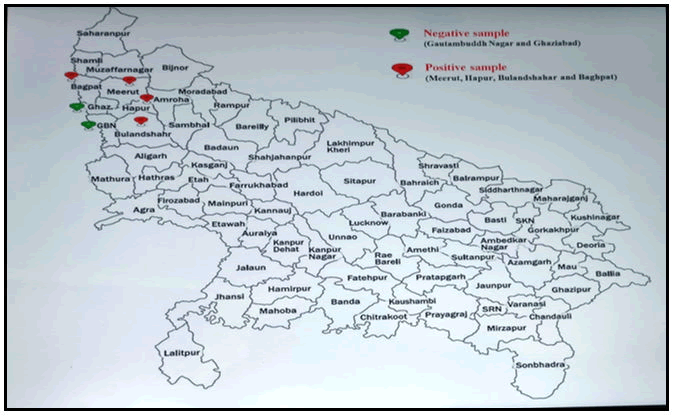
Figure 1: District wise map of Uttar Pradesh state, India.
Out of six surveyed district of Meerut division, Uttar Pradesh, red point showed the districts samples infected with Karnal bunt and green point showed the districts samples not infected with Karnal bunt [9].
Molecular confirmation of Tilletia indica
Molecular based confirmation being very specific and sensitive; all four presumptive isolates of Tilletia indica were subjected to RT-PCR and PCR based confirmation with previously reported custom synthesized primers was done by as per protocol of ISPM-27.
RT-PCR confirmation of Tilletia indica
All four isolates were subjected to RT-PCR based amplification with species specific primer Tin3-F and Tin10-R to obtain a unique graph (Figure 2). All four sample were amplified, and confirmed that these species are Tilletia indica.
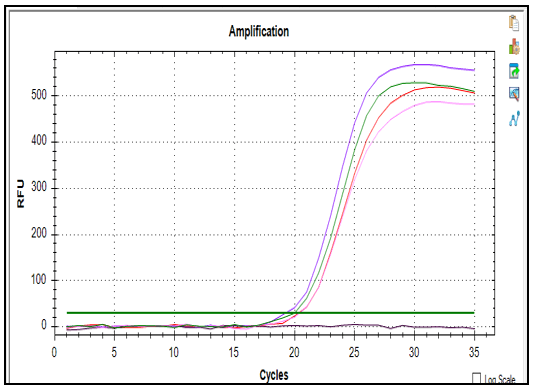
Figure 2: Amplified graph of Tilletia indica in RT-PCR
PCR confirmation of Tilletia indica
All four isolates of Tilletia indica were subjected to PCR based amplification using species specific Forward primer Tin3 and Reverse primer Tin4. The electrophoresis of PCR amplicon revealed the amplification of 414 bp product size (Figure 3). Thirumalaisamy et al. also used species specific primers from rDNA-ITS region and mtDNA fragment of Tilletia indica and specifically amplified at 570 bp and 885 bp amplicon to differentiate T. indica, T. horrida and T. caries isolates.
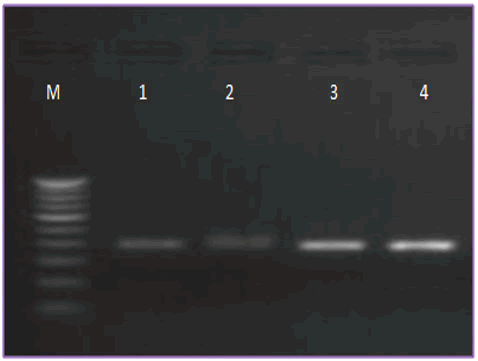
Figure 3: Agarose gel electrophoresis of PCR products produces approximately 414 bp. Here lanes M=100 bp ladder, and 1 to 4 are the presumptive isolates of T. indica.
Amplification is also confirmed with another species primer, Forward primer MK56 and Reverse primer TilletiaR and it gave a unique band of 212 bp DNA fragment (Figure 4).
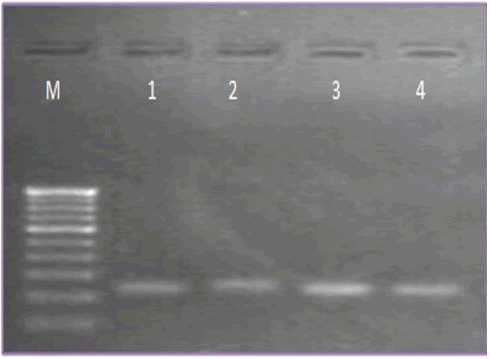
Figure 4: Agarose gel electrophoresis of PCR products produces approximately 212 bp. Here lanes M=100 bp ladder, and 1 to 4 are the presumptive isolates of T. indica.
Universal primer ITS1 and ITS4
All four isolates were subjected to PCR based amplification with Forward primer ITS1 and Reverse primer ITS4 to obtained a unique band of 670 bp DNA fragment (Figure 5).
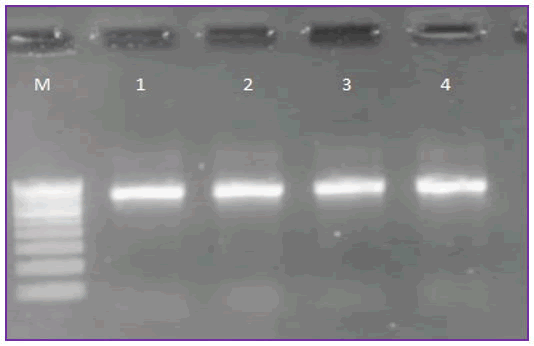
Figure 5: Agarose gel electrophoresis of PCR product produces approximately 670 bp. Here Lanes M=100 bp ladder, and 1 to 4 are the presumptive isolates of T. indica.
Out of four amplified yield of PCR product one product was purified and sequenced in both strand (Centyle Biotech Pvt. Ltd., Delhi) for species confirmation. After sequencing, the sequence trim using Bioedit software for further analysis and the complete sequence was BLAST as nucleotide blast on NCBI portal. The top 20 similar sequence was selected for multiple sequence alignment and phylogenetic tree was constructed using MEGAX (Figure 6).
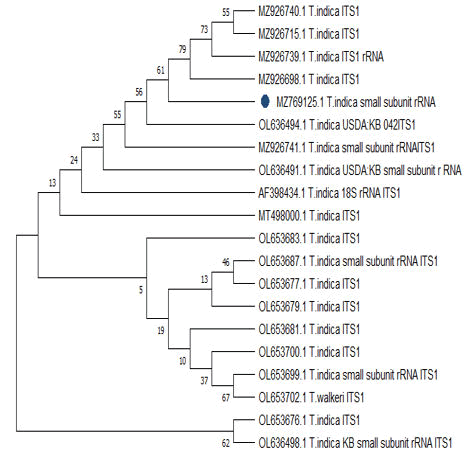
Figure 6: The phylogenetic tree of the Tilletia indica was constructed based on its nucleotide sequence reported in different places. Blue dot indicates the present.
Conclusion
Results obtained from post-harvest survey conducted during 2021-2022 and 2022-2023 in 45 blocks of Meerut Division. Samples of 30 blocks (four districts) were found to be positive whereas, remaining 15 blocks were observed negative. While all the samples collected from two district namely Ghaziabad and Gautambuddh Nagar were found to be negative. During the molecular identification, all presumptive samples of four districts (Meerut, Bulandshahar, Hapur and Baghpat) were found to be positive during RT-PCR and PCR amplification.
The economic free trades between the different countries of the world increase the potential risk to introduce the disease entrance in the free territories. A regular survey in agricultural fields is the way to identify the disease-free areas for wheat production. The disease incidence in all the districts is very low which is good sign and all the lines are in the resistant range. The presence of two to three infected seeds can infect the lot and ultimately transfer and increased when planted in the next season.
Future Prospective
The presence of the diseases in wheat growing areas of surveyed districts of Western Uttar Pradesh, indicate that there is a dire need to monitor the disease on regular basis and extensive survey should be conducted to identify the Karnal bunt disease free zones to avoid future threat and the production of export quality of wheat. Over all the study is providing the complete scenario in Meerut Division and indicating that overall situation of Karnal bunt incidence in the fields is very low which is a good sign but we should be very careful and continues survey should be conducted across the wheat growing areas of Western Uttar Pradesh early warning and adopting the strategies to avoid future threat.
References
- Munir A, Iftikhar S, Ahmad Y (2012) Morpholical and physiological characterization of Tilletia indica isolates from Punjab and Khyber pakhtunkhwa. Pak J Phytopathol 24: 106-111.
- Beniwal M, Duhan SJC, Singh R, Chawla P (2000) Assessment of yield loss and seedling vigour in wheat due to Karnal bunt. Seed Res 28: 102-103.
- Beniwal MS, Karwasra SS, Singh R (2005) Distribution of Karnal bunt and black point of wheat in Haryana. Haryana Agric Univ J Res 35: 127-130.
- Carris LM, Castlebury LA, Goates BJ (2006) Nonsystemic bunt fungi-Tilletia indica and T. horrida: A review of history, systematics, and biology. Annu Rev Phytopathol 44: 113–133.
- Figueroa M, Hammond-Kosack KE, Solomon PS (2018) A review of wheat diseases-a field perspective. Mol Plant Pathol 19: 1523–1536.
[Crossref] [Google Scholar] [PubMed]
- Jakhar SS, Punia RC (2013) Status of Karnal bunt in farmers own saved wheat seed in Haryana. Pl Dis Res 28: 157-158.
- Kumar A, Gupta A, Atwal SS, Maheshwari VK, Singh CB (2015) Post-harvest management of Karnal bunt, a quarantine disease in wheat. Plant Pathol 14: 23-30.
- Kumar S, Singh D (2014) Integrated management of Karnal bunt of wheat. J Ind Pollut Control 30: 247-250.
- Munjal RL (1975) Status of Karnal bunt (N. indica) of wheat in North India during 1968-69 to 1969-70. Indian J Mycol Pl Pathol 5: 185-187.