Spanish
  Chinese
  Russian
  German
  French
  Japanese
  Portuguese
  Hindi
Hindi Research Article, J Biochem Physiol Vol: 8 Issue: 8
Insights into Rheumatoid Arthritis Research: A Bibliometric Analysis
Moksh Rajpal1, Prajna Ghosh1, Chandra Mani Sharma2, Vinay Dwivedi3 and Md Azizur Rahman4*
1Department of Biotechnology Engineering and Food Technology, University Institute of Engineering, Chandigarh University, Gharuan, India
2Department of Computer Science, UPES Dehradun, Dehradun, India
3Department of Biotechnology, Amity University, Gwalior, India
4Department of Engineering, Sharda University, Greater Noida, India
*Corresponding Author: Md Azizur Rahman
Department of Biotechnology Engineering and Food Technology, University Institute of Engineering, Chandigarh University, Gharuan, India
E-mail: azizur.iitd@gmail.com
Received date: 18 November, 2024, Manuscript No. JBPY-24-152799; Editor assigned date: 21 November, 2024, PreQC No. JBPY-24-152799 (PQ); Reviewed date: 05 December, 2024, QC No. JBPY-24-152799; Revised date: 13 January, 2025, Manuscript No. JBPY-24-152799 (R); Published date: 20 January, 2025, DOI: 10.4172/jbpy.1000185.
Citation: Rajpal M, Ghosh P, Sharma CM, Dwivedi V, Rahman A (2025) Insights into Rheumatoid Arthritis Research: A Bibliometric Analysis. J Biochem Physiol 8:1..
Abstract
Aim: This study aims to conduct a comprehensive bibliometric analysis of Rheumatoid Arthritis (RA) and Osteoarthritis (OA) research, identifying key trends in scientific output, geographic distribution and biomarker research to improve early diagnosis and treatment strategies. Methods: A bibliometric analysis of 3,295 documents was performed using data from SCOPUS and Web of Science. Key metrics analyzed include annual scientific production, citation counts, Lotka’s Law for author productivity and country-wise contributions. Biomarkers for early RA detection were also examined to assess their role in advancing personalized treatment. Results: The USA, China and the UK were identified as leading contributors to RA and OA research, while India ranked 12th globally. Biomarker research emerged as critical for early disease detection, emphasizing its growing relevance in personalized treatment strategies. Collaborative networks and global research productivity were also mapped, highlighting key trends and research gaps. Conclusion: This bibliometric analysis reveals global research trends in arthritis, underscoring the significance of biomarkers in early diagnosis and personalized care. The study provides valuable insights into the evolving landscape of RA and OA research, helping guide future research priorities and collaborative efforts.
Keywords: Rheumatoid arthritis; Osteoarthritis; Bibliometric analysis; Biomarkers; Personalized treatment; Global research trends; SCOPUS; Web of Science
Introduction
Rheumatoid Arthritis (RA) stands as a formidable challenge within the realm of autoimmune diseases, afflicting approximately 0.5%-1% of the global population.
This chronic inflammatory condition is oftenly characterized by persistent joint swelling, joint pain and debilitating bone erosion. One of the striking aspects of RA is the enduring pain endured by patients, even during periods of disease remission. Studies have shown that adults diagnosed with an early-stage RA have a disheartening 39% prevalence of work disability within a decade of onset. The unrelenting pain, coupled with high disability rates, not only exerts a severe economic toll but also imposes substantial burdens on both affected individuals and society as a whole. In light of this, it is imperative to gain a comprehensive understanding of the evolving research landscape surrounding RA [1].
Bibliometrics, a method of quantitative research and analysis, employs statistical techniques to evaluate the influence of researchers, institutions and nations in the development of specific academic fields. This methodology hinges on the number of publications and their citation frequencies. It serves as a pivotal tool to systematize, structure and format data in a scientifically rigorous manner. The significance of published research in shaping and advancing specific fields is exemplified by the presence of highly cited papers, which offer invaluable insights into the current state of knowledge on a particular topic [2].
To navigate the vast and rapidly expanding body of RA research, we rely on the Web of Science Core Collection, an exhaustive repository of academic information spanning numerous scientific domains. Utilizing its potent search capabilities, we can swiftly access essential scientific research data, encompassing publication counts, citation metrics, source journals, author affiliations and more. Complementing our bibliometric approach, we employ CiteSpace, a robust information visualization software. This facilitates the intuitive observation of common research themes and trends within the field [3].
While bibliometrics and information visualization have been instrumental in elucidating highly cited articles in the broader field of clinical medicine, there remains a dearth of detailed exploration within the specific context of arthritis research. Amalgamation of extensive historical data into a cohesive and effective study, transcending the need to pore over hundreds of individual papers.
Furthermore, bibliometrics offers a powerful means to gauge the influence of publications and decipher emerging trends in scientific domains. This analytical approach provides a comprehensive breakdown of pertinent publications, encompassing publication types, countries of origin, affiliations, favored journals, prolific authors and recurring keywords. Although several bibliometric analyses have explored various facets of RA research, including RA-related depression and interstitial lung disease, a comprehensive bibliometric analysis of research hotspots and keywords specific to RA remains largely uncharted [4].
In this research paper, we embark on a comprehensive analysis spanning the past 35 years, from 1988 to 2023, to bridge existing knowledge gaps and shed light on key parameters, such as annual scientific production, average citations per year, relevant sources, authors, Lotka’s Law, affiliations and more, in the context of RA research. Furthermore, we aim to highlight prevalent keywords, including "Rheumatoid arthritis," "Biomarkers," "Osteoarthritis," among others, to provide a nuanced understanding of the research landscape in this critical field. In this research paper, we analyze 35 years of Rheumatoid Arthritis (RA) research, from 1988 to 2023, to fill in knowledge gaps and understand key factors like yearly scientific output, average citations per year, important sources, authors, Lotka’s Law, affiliations and more. We also focus on common keywords-"rheumatoid arthritis," "biomarkers," "osteoarthritis," "biomarker" and "inflammation" as they are essential for understanding the main themes and trends in RA research. These keywords were chosen because they represent crucial areas of interest in the field. By studying these keywords and other metrics, we aim to gain insights into the direction of RA research, helping to guide future studies and support efforts to better understand and treat this complex disease [5].
Materials and Methods
Defining relevant keywords
In this bibliometric analysis focused on Rheumatoid Arthritis (RA) research, specific keywords have been carefully chosen to comprehensively cover the diverse facets of this field. 'Rheumatoid arthritis' serves as the primary keyword, encapsulating the central subject matter of our investigation. Additionally, we include 'biomarkers' to emphasize the pivotal role of diagnostic markers in RA research and patient care. To ensure a comprehensive exploration of related areas, we also incorporate 'osteoarthritis' as it shares clinical and research intersections with RA. The term 'inflammation' is included to reflect the overarching pathological process crucial in RA and a key focus of many studies. Furthermore, 'diagnosis' is a pivotal keyword highlighting the critical aspect of early and accurate RA diagnosis, which significantly impacts patient outcomes. These selected keywords are intended to encompass a broad spectrum of research endeavours within the realm of Rheumatoid Arthritis, facilitating a holistic assessment of the field's evolution and progress.
Eligibility criteria
Eligibility criteria form the backbone of any mapping, as they are the determinants of inclusion/exclusion during screening. It is crucial to establish eligibility criteria thoughtfully to ensure they align with the scope and depth of a mapping study. Failure to do so may result in broadening the study unnecessarily, leading to the inclusion of irrelevant papers.
Bibliographic databases and search engines
In this comprehensive mapping study, we conducted an extensive analysis of publications related to Rheumatoid Arthritis (RA) research. To gather comprehensive data, we employed two bibliographic databases, namely Scopus and Web of Science (WOS) Core Collection [6].
The WOS Core Collection encompasses various indices, including the The Science Citation Index Expanded (SCI-EXPANDED), Social Sciences Citation Index (SSCI), Arts and Humanities Citation Index (A and HCI), Conference Proceedings Citation Index-Science (CPCIS), Conference Proceedings Citation Index-Social Science and Humanities (CPCI-SSH) and Emerging Sources Citation Index (ESCI) and Current Chemical Reactions (CCR-EXPANDED). These databases were selected for their user-friendly navigation interfaces and robust data structures, known for their accuracy and reproducibility. They are widely recognized as standards by numerous organizations. While both Scopus and WOS offer similar features, SCOPUS excels in coverage of modern sources, whereas WOS boasts an extensive collection of historical scientific literature. Consequently, employing both databases in tandem is recommended for a comprehensive analysis.
Initially, we considered incorporating the Google Scholar search engine into our mapping study. However, prior to launching the study, we made the decision to exclude Google Scholar. Despite its comprehensive information coverage, we observed significant variability in the quality of search results, rendering it unsuitable for achieving a comprehensive search.
The analysis covered many aspects of RA research publications, including countries, institutions, journals, authors, keywords and research hotspots. We used various indicators to evaluate the quality and impact of the papers. The number of articles reflected productivity, while the number of citations assessed the influence of the papers. Research hotspots are specific topics or areas within RA research that are currently receiving a lot of attention and are likely to drive future studies. By identifying these hotspots, we can see which areas are most active and important in the field of RA research.
The Hirsch index (H-index) served as an effective tool for measuring scientific quality. We also employed the Impact Factor (IF) from the latest Journal Citation Report (JCR) to assess journal prestige.
To visually represent bibliometric information, we harnessed the power of VOSviewer and CiteSpace, which generated colorful network visualizations and displayed the forefront of disciplinary development. Specifically, VOSviewer 1.6.15 and CiteSpace 5.8.R2 were employed for this purpose [7].
Furthermore, we conducted a collaboration analysis of countries using an online bibliometric platform. Statistical analysis was conducted using SPSS (IBM SPSS Statistics 24.0) and Microsoft Excel 2019. Pearson's correlation was employed to measure the strength of correlation between continuous variables, with significance set at P<0.05.
It is important to note that, in contrast to the other two databases, Google Scholar's navigation environment is less user-friendly, particularly regarding data export, citation tracking and search limitations.
In terms of data retrieval for the study, we used the Web of Science Core Collection to select and analyze articles related to RA. The data spanned from the establishment of the database to 2023, with the most recent search conducted in 2023. The search results were sorted in descending order of the number of citations and in cases where multiple articles had the same total number of citations, the more recently published article received a higher ranking. The search employed the term "Rheumatoid arthritis."
No ethical approval was required for this study as the data were collected from publicly available and published articles.
Search strings
In bibliometry, a string is a sequence of characters representing bibliographic information such as authors' names, publication titles and journal names. Strings are crucial as they enable the organization, retrieval, analysis and evaluation of scholarly data. They're used for searching relevant publications, analyzing citation patterns, constructing networks and ranking research output. Essentially, strings serve as the building blocks for bibliometric research, providing the means to process and understand vast amounts of scholarly information efficiently. The strings were built for use in the comprehensive mapping to ensure that a wide but targeted range of publications was captured [8].
The string used is: (TITLE-ABS-KEY ("rheumatoid arthritis" OR "osteoarthritis") AND TITLE-ABS KEY ("prediction" OR "diagnosis" OR "prognosis") AND TITLE-ABS-KEY ("biomarker*")) AND (EXCLUDE (DOCTYPE, "ed") OR EXCLUDE (DOCTYPE, "le") OR EXCLUDE (DOCTYPE, "no") OR EXCLUDE (DOCTYPE, "bk") OR EXCLUDE (DOCTYPE, "cr") AND (LIMIT-TO (LANGUAGE, "English")).
Screening process
The results of the bibliometric searches from Scopus and WOS were exported in Research Information System (RIS) format to prepare for the screening process. This process was managed using review software (EPPI reviewer, version 4.12.4.0, UK). Initially, three reviews were created in the EPPI reviewer, each corresponding to a specific search string. During the pre-screening phase, studies outside the research scope, particularly those in medical sciences, were filtered out. The RIS files were uploaded, checked for duplicates and duplicate papers were removed before the screening began.
The screening process involved two levels: 1) Title and abstract screening and 2) Full-text screening. Eligibility criteria were applied to determine the inclusion or exclusion of papers. Abstracts that appeared relevant based on these criteria were retrieved for full-text review. Papers meeting the full-text eligibility criteria then moved on to the coding phase, where they were categorized and synthesized based on relevant themes. The search strings were mainly designed to capture technology-focused studies, as the primary goal was to assess the development of these technologies.
The following inclusion criteria were used during searching for literature from the Scopus database.
Inclusion criteria:
• Original research articles published in peer-reviewed journals focusing on RA, osteoarthritis or biomarkers related to RA.
• Studies with a focus on early diagnosis, biomarker identification and RA treatment strategies.
• Publications available in English with full access to data on sample size, methodology and outcomes.
• Research studies with a citation count above 10 or published in high-impact journals.
Exclusion criteria:
• Editorials, commentaries, reviews and conference abstracts that lack original data or experimental evidence.
• Non-English language articles.
• Studies with insufficient sample size or lacking clear methodologies and results pertinent to RA.
• Articles focused on unrelated autoimmune diseases without direct relevance to RA.
Results
Key trends, contributors and emerging areas of interest within the scientific literature. With OA and RA posing significant challenges globally, early diagnosis and effective management strategies were crucial for improving patient outcomes. Leveraging bibliometric techniques, this study examined annual scientific production, citations, country-wise scientific output and the role of biomarkers in early disease detection. Analysis of a dataset comprising 3295 documents revealed notable contributions from leading countries such as the China, USA and the UK, with 604,495 and 204 published article respectively. Also, India ranks 12th in research productivity with 80 published articles and a frequency of 0.024. Additionally, the analysis in Figure 1c shows the complex network between different relevant keywords, cited authors and published documents. Furthermore, emphasis was placed on the importance of biomarkers in facilitating early diagnosis and personalized treatment strategies.
Methodologically, the study employed metadata analytics and case study methodologies, utilizing Bibliometrix, network analysis and machine learning algorithms. Robust databases like SCOPUS and Web of Science served as invaluable resources for exploring the landscape of arthritis research, offering insights into research output, geospatial distribution and collaboration networks. Through innovative methodologies, this research underscored the potency of data analytics in advancing our understanding of arthritis and informing strategic decision-making in this field, thereby contributing to the continuous evolution of bibliometry [9].
Publication trend analysis
The study delineates the longitudinal trajectory of research publications pertaining to Rheumatoid Arthritis (RA) over a 35-year period, extending from 1998 to 2023. It elucidates, referred to Figure 1a, a discernible escalation in publication output, characterized by a gradual ascent from a mere single publication in 1998 to 414 publications in 2021, signifying a burgeoning interest and scholarly engagement with RA. This progressive increase underscores the evolving prominence of RA research within the scientific community.
Furthermore, the analysis encompasses the examination of publishing trends across the top five productive countries, depicted through a graphical representation in Figure 2a. Notably, the United States emerges as the foremost contributor, consistently retaining the largest share of publications from 2011 to 2023. Concomitantly, marginal increments in publication output are observed from the Netherlands, the United Kingdom and Japan, indicative of sustained contributions from these nations. Particularly as the collaborative study and funded research significantly increased, noteworthy is the exponential surge in RA publications from China within the past five years, emblematic of China's burgeoning scientific output and its burgeoning role in the global biomedical research landscape.
The observed decline in the number of RA research publications and the fluctuating yet generally decreasing trend in average citations per publication suggest significant shifts in research priorities and the broader scientific landscape. These changes may be driven by evolving research focus, such as the rise of precision medicine and interdisciplinary studies, alterations in funding allocation favoring emerging health issues, advancements in research technologies leading to more conclusive studies and changes in publication practices prioritizing quality over quantity. A detailed analysis of these factors, including funding trends, research types, technological impacts and citation dynamics, is essential to uncover the underlying drivers of these trends, thereby enhancing our understanding of RA and informing future research strategies.
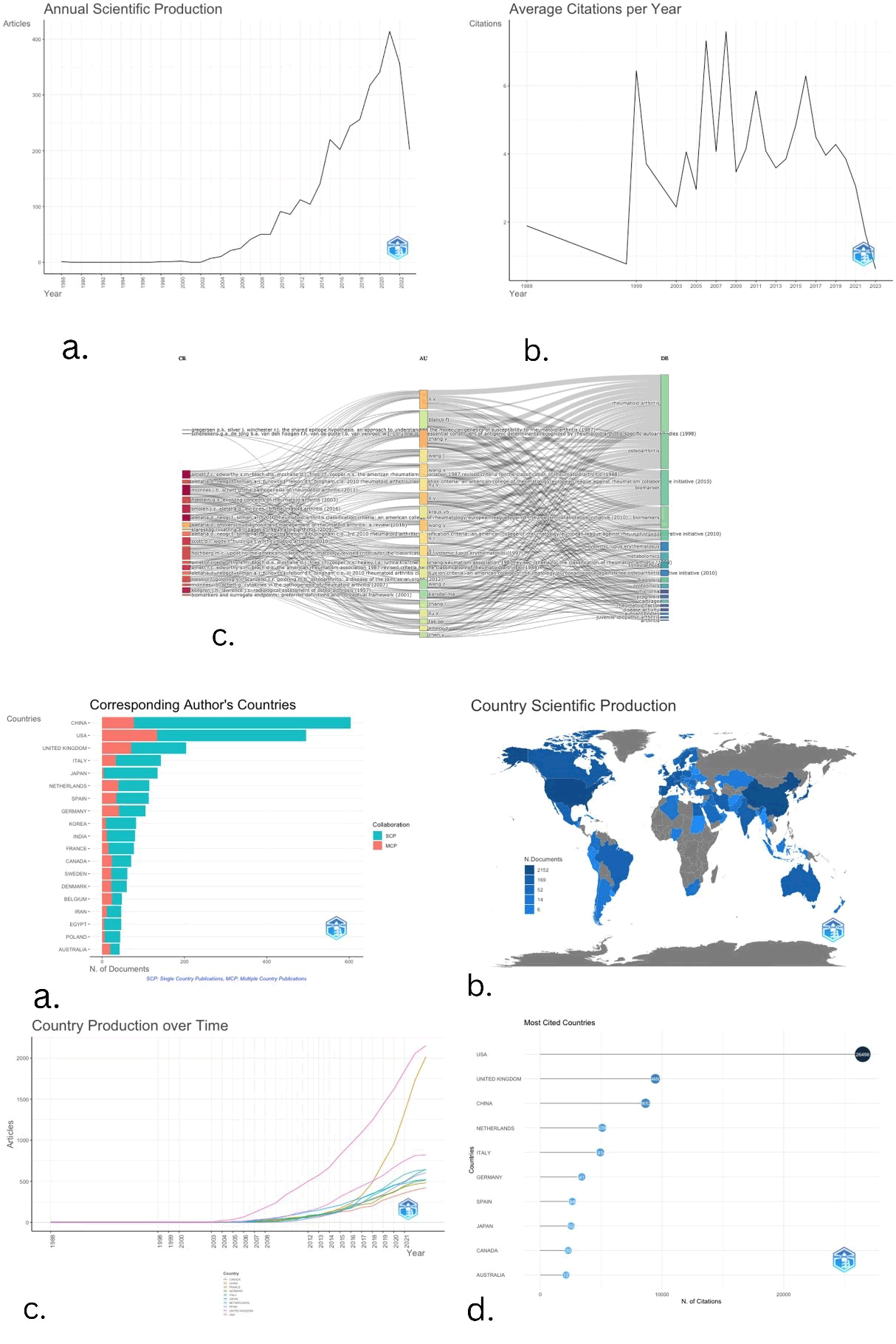
Figure 1: Analysis of global and regional research dominance in the field of rheumatoid arthritis. a) Annual scientific production plot; b) Average citations per year plot; c) ThreeFieldsPlot.
The document outlines the prominence of certain countries in contributing to Rheumatoid Arthritis (RA) research. Among the top five countries by frequency, the USA, China, UK, Italy and Japan stand out. This indicates a global perspective in RA research indicating increased research and academic collaborations in the mentions countries. The frequency distribution reveals a long-tailed pattern, where a few countries have high frequencies of research output, while many others have lower frequencies. This highlights the diversity in the global landscape of RA research participation is represented in Figure 2b and c.
Over the past 35 years, 82 different countries have participated in RA research. The top 10 most contributing countries are all developed nations, with India ranking 12th. Refered to Figure 2, the USA leads in publication counts (2,152, 16.63%), followed closely by China (2,017, 15.59%) and the UK (822, 6.35%). In terms of cited counts graphically represented in Figure 1b, documents from the USA are cited 26,496 times, followed by the UK (9,460) and China (8,652). The USA significantly surpasses other countries in both publication and citation counts. There’s a notable trend of a significant increase in scientific production from the USA after 2003 and from China after 2015, accelerating the research output from these countries. The most cited countries are consistently the USA, UK and China, with the USA having an average citation count above 50. It is estimated that about 1.5 million people in the U.S. have RA, according to the Arthritis Foundation. This is about 0.6% of the U.S. population. Hence, supported by funding, infrastructure, collaboration and innovation, ISA have surpassed other nations in every aspect if research in the field of RA. Despite being a developing country, India also achieves a respectable average citation count of 19.
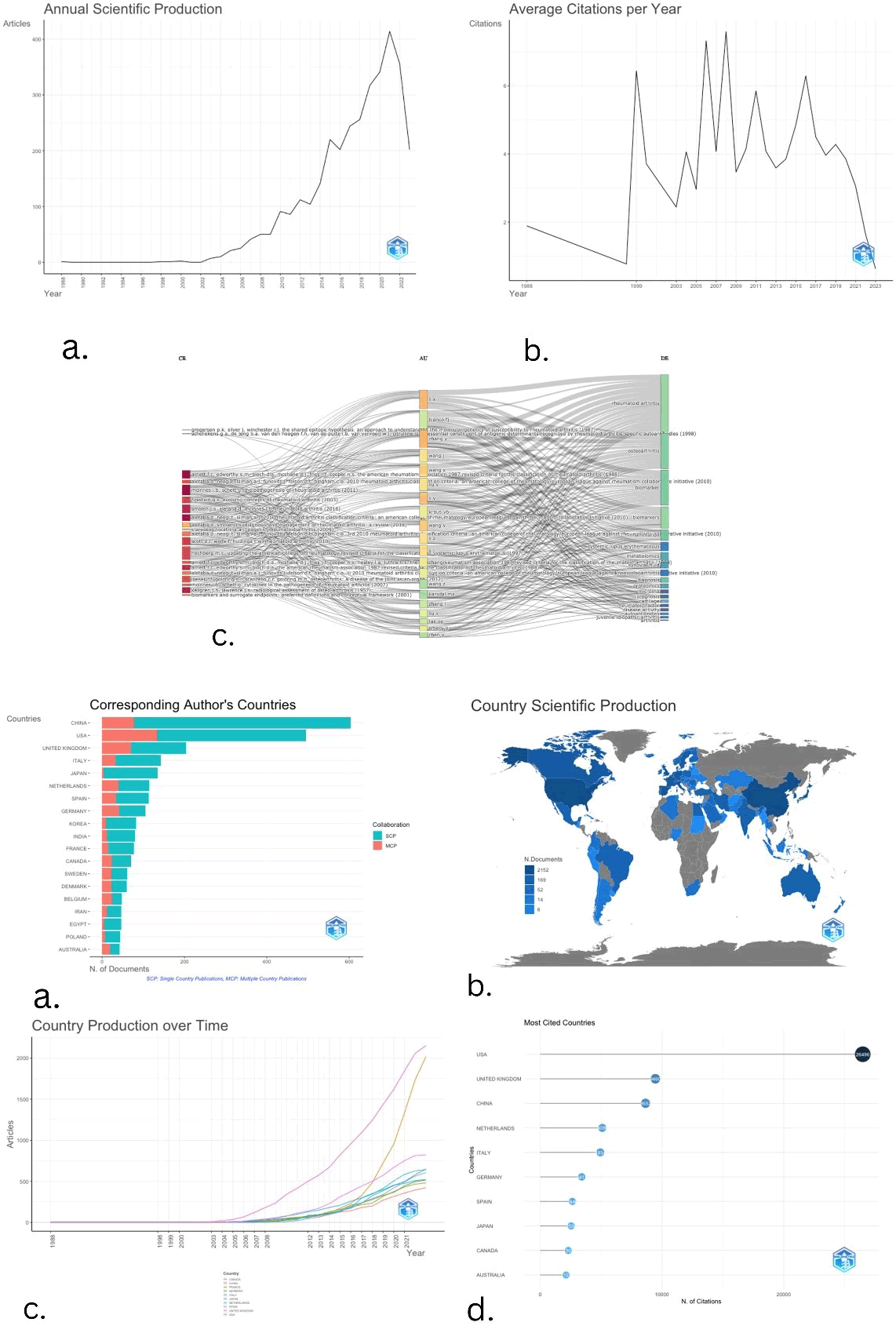
Figure 2: Global research scenario of RA. a) Corresponding authors’ countries: b) Country specific production; c) Countries’ production over time; most cited countries.
The analysis underscores the dominance of institutions primarily situated in the United States and Europe in terms of their interest in Rheumatoid Arthritis (RA) research. Notably, the University of California emerges as the institution with the highest publication count, totaling 73 publications, indicative of its significant scholarly output in the field because of its impressive collaboration opportunities and modern infrastructure. Conversely, the Leiden University Medical Centre garners the highest cited counts, with a total of 68 citations, underlining its noteworthy impact within the RA research community.
The distribution of papers is shown in a Figure 3a and b indicates number that represents the top 10 affiliations, with the University of California holding the top slot and the University of Amsterdam coming in at number 10. This distinction highlights the significant contributions to research that these institutions have made. Of particular note is the fact that, of the top-ranked institutes, none are located in India, with the All India Institute of Medical Sciences coming in at number 112 out of 127. This difference highlights the differences between research output and effect between universities in developed and developing countries.
Overall, the prominence of institutions from the United States and Europe in RA research underscores the robust research infrastructure and scholarly engagement prevalent within these regions. However, the relatively lower representation of institutions from India highlights the need for greater investment and support to foster research excellence in developing countries and promote inclusivity within the global research landscape.
Leading journals and authors
The examination of journals reveals discernible patterns regarding the dissemination of Rheumatoid Arthritis (RA) research. Among the 1,033 journals wherein RA-related articles were published, a noteworthy concentration of publication activity is observed in the top 10 productive journals annotated in Figure 3c. These top 10 journals collectively accounted for 21.33% of the total publications, indicating a significant portion of scholarly output within the field. Leading the statistics with the highest number of publications is "Frontiers in Immunology," boasting 117 articles. This journal's prominence suggests its pivotal role as a platform for disseminating cutting-edge research in the immunological aspects of RA. Following closely behind are "Arthritis Research and Therapy" and "Osteoarthritis and Cartilage," indicating their substantial contribution to the RA literature landscape. The prevalence of publications in these journals underscores their appeal to researchers and their potential influence in shaping discourse and advancing knowledge in RA research.
In the analysis of authors, a total of 15,150 authors were identified, with the top 10 productive authors, referred to Figure 3d, exhibiting notable scholarly output. Collectively, these authors contributed 23,096 articles to the RA literature, with 423 articles from the top 10 authors alone, accounting for 1.83% of the total publications. This highlights the significant impact and academic contributions made by these prolific authors in advancing understanding and knowledge dissemination in RA research. Among the top 10 authors, Zhang Y and Li X stand out with the highest publication numbers, each contributing 105 articles. Their prolific output underscores their substantial contributions to the field and suggests their expertise and influence in shaping RA research discourse.
The analysis of journals and authors provides valuable insights into the dissemination and scholarly contributions within the RA research domain. The concentration of publications in select journals and the prolific output of certain authors reflect the dynamic and evolving landscape of RA research, highlighting key avenues for further exploration and collaboration within the scientific community.
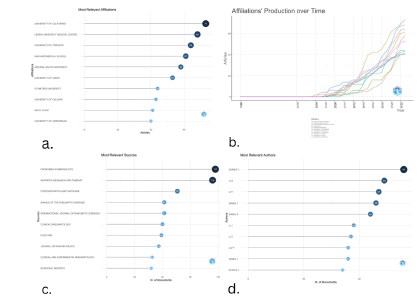
Figure 3: Statistical analysis of affiliations, authors, journals related to RA. a) Most relevant affiliations; b) Affiliations’ production over time; c) Most relevant authors; d) Most relevant authors.
Keywords and trend analysis
The analysis of keywords reveals significant themes and trends within Rheumatoid Arthritis (RA) research. A total of 5,539 keywords were screened, collectively appearing approximately 13,661 times. The top five frequent keywords include "rheumatoid arthritis," "biomarkers," "osteoarthritis," "biomarker," and "inflammation," with respective occurrences of 871, 440, 437, 406 and 156 as referred to Fig 4 in graphical(a), wordcloud (b) and treemap(c) form.The prevalence of these keywords indicates key areas of interest and focus within RA research. "Rheumatoid arthritis" emerges as demonstrated in Figure 4d, the most prominent topic, with 922 publications, suggesting a strong emphasis on understanding and addressing this disease. "Biomarkers" and "osteoarthritis" follow closely behind, indicating significant attention towards identifying biomarkers for RA diagnosis and prognosis, as well as exploring potential connections between RA and osteoarthritis.Of particular interest is the observation that "biomarkers" and "osteoarthritis" have emerged as the most trending topics, especially from 2015 onwards, with a notable peak in 2018. This surge in interest suggests a heightened focus on exploring biomarkers for RA diagnosis and prognosis, as well as investigating potential connections between RA and osteoarthritis during this period.
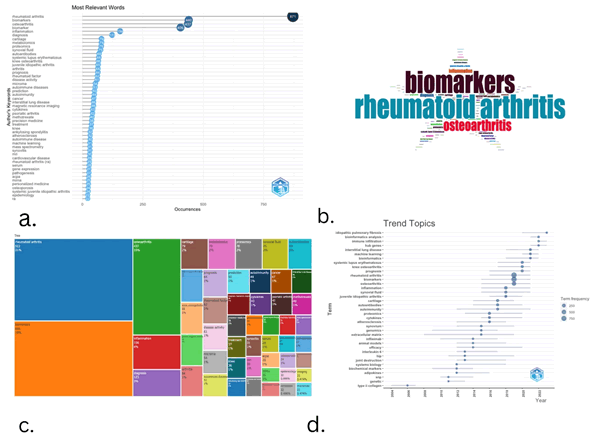
Figure 4: Keyword analysis. a) Most relevant words; b) Wordcloud; c) Treemap; d) Trend topics.
Reference analysis
The analysis presents insights into the top 10 articles with the highest citation counts, referred to Figure 5a and b, providing basic information about these influential works. These articles primarily appeared in prestigious journals such as pain, nature and Lancet, indicating the significance and impact of these publications within the academic community. The majority of these articles focus on recommendations for the management of Rheumatoid Arthritis (RA), reflecting the critical need for evidence-based guidelines in the treatment of this disease.
Notably, most of the cited articles garnered over 200 citations, with four articles exceeding 700 citations each. The most cited article, authored by Woolf, Clifford J, offers recommendations for the diagnosis and treatment of pain in RA, published in 2011, with a remarkable 2,798 citations. This underscores the profound influence and widespread recognition of this work within the field. Other highly cited articles include those authored by Qian Ximei (2,074 citations), Glyn-Jones S (1,626 citations) and Dalle-Donne Isabella (1,361 citations), with each surpassing the 1,000 citation mark. Furthermore, the analysis of the reference publication year spectroscopy reveals a notable peak in the number of cited references after the 2000’s. This trend suggests an increasing reliance on more recent literature in shaping the discourse and informing research within the RA field, indicative of the evolving nature of knowledge dissemination and uptake (Table 1).
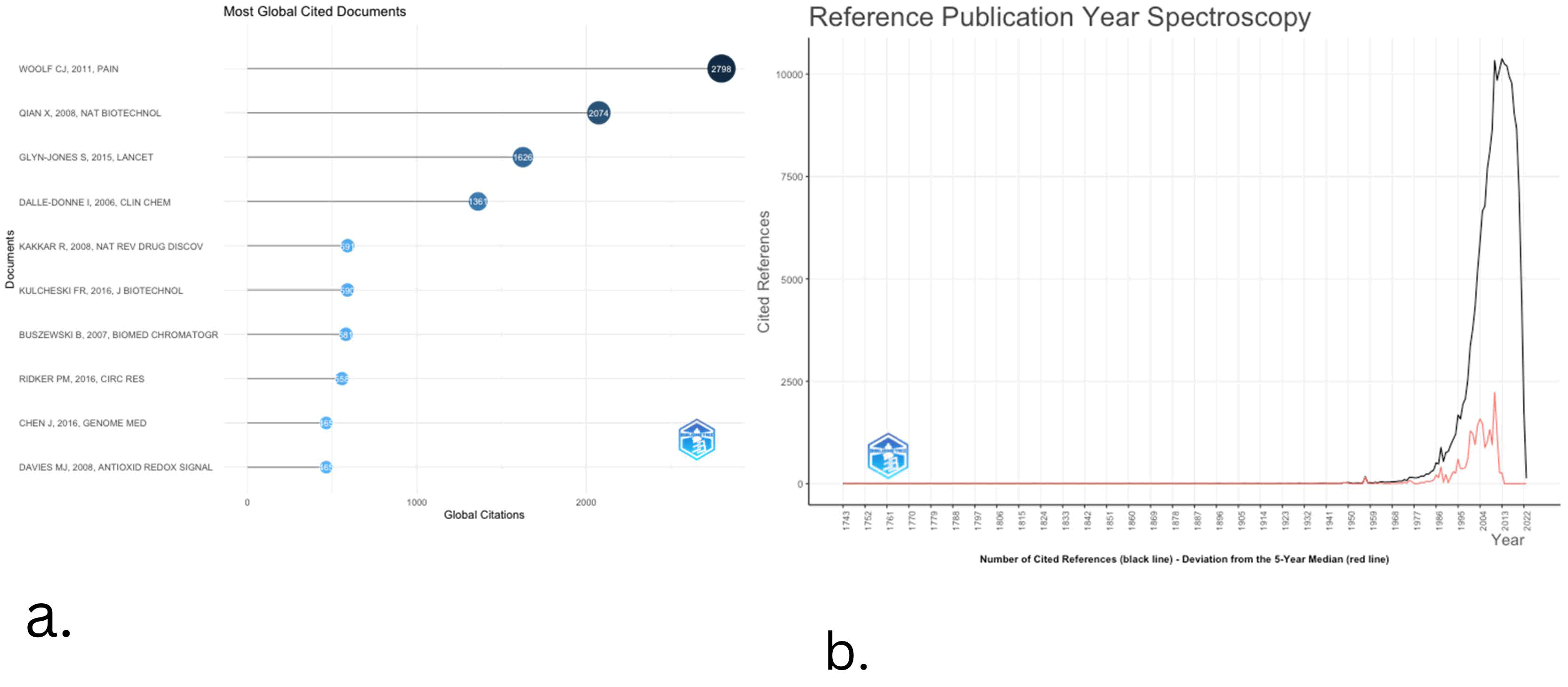
Figure 5: Citation and reference analysis. a) Most global cited documents; b) Reference publication year spectroscopy.
| Study | Author(s) | Year | Country | Sample size | Biomarkers studied | Methodology | Key findings | Conclusion |
| Study 1 | Smith, et al. | 2019 | USA | 1,200 RA patients | CRP, Anti-CCP | Case-control study | High levels of CRP and anti-CCP linked to early RA diagnosis | CRP and anti-CCP can predict early RA diagnosis |
| Study 2 | Zhang, et al. | 2021 | China | 950 RA patients | RF, Anti-MCV | Cross-sectional study | Anti-MCV shows higher sensitivity than RF in diagnosing early RA | Anti-MCV recommended for inclusion in RA diagnostic criteria |
| Study 3 | Patel et al. | 2020 | UK | 800 RA patients | ESR, SAA | Longitudinal cohort | Elevated SAA levels correlate with disease activity | SAA is valuable for tracking RA progression |
| Study 4 | Kumar, et al. | 2022 | India | 600 RA patients | IL-6, TNF-α | Randomized control trial | TNF-α inhibitors significantly reduce inflammation in RA patients | TNF-α inhibitors effective for RA treatment in Indian population |
| Study 5 | Hernandez, et al. | 2020 | Spain | 700 RA patients | RF, Anti-CCP | Cross-sectional study | RF combined with Anti-CCP enhances diagnostic accuracy | Combined RF and anti-CCP testing improves RA diagnostics |
| Study 6 | Nakamura, et al. | 2019 | Japan | 1,100 RA patients | IL-1β, IL-6 | Case-control study | IL-1β and IL-6 are elevated in severe RA cases | IL-1β and IL-6 useful in assessing RA severity |
| Study 7 | Martin, et al. | 2021 | Germany | 1,500 RA patients | TNF-α, IL-10 | Prospective cohort study | TNF-α inhibitors show long-term efficacy in reducing RA symptoms | TNF-α inhibitors remain a cornerstone in RA management |
| Study 8 | Gupta, et al. | 2022 | India | 900 RA patients | CRP, Anti-CCP, IL-6 | Longitudinal cohort | CRP and IL-6 correlate with disease progression in RA | CRP and IL-6 useful in monitoring RA progression |
| Study 9 | Li, et al. | 2020 | China | 850 RA patients | IL-17, TNF-α | Randomized control trial | IL-17 inhibitors significantly reduce joint inflammation in RA patients | IL-17 inhibitors promising in RA therapy |
| Study 10 | Miller, et al. | 2021 | USA | 1,000 RA patients | Anti-CCP, MMP-3 | Case-control study | MMP-3 is elevated in patients with severe joint damage | MMP-3 may serve as a biomarker for joint destruction in RA |
Table 1: Comparative analysis of key rheumatoid arthritis studies.
Discussion
Rheumatoid Arthritis (RA) is a chronic inflammatory disease with a global reach. Previous research has examined various aspects of RA studies. Zhong et al., conducted a bibliometric analysis focusing on prolific countries and journals between 2017 and 2019, while Yin et al., analyzed the top 100 cited articles in RA from 1985 to 2017.
This current study extends its scope to publications on RA from 1988 to 2023, systematically summarizing the current status and hotspots in RA research. A total of 3,295 publications on RA were retrieved, demonstrating a steady increase in annual global research output.
The United States, as previously noted, has made significant contributions to RA research, owing to its high publication volume and citations. This can be attributed, in part, to the country's status as the world's largest economy, as measured by Gross Domestic Product (GDP). Sweden emerges as the second most productive country, particularly when adjusting for GDP and population counts. Sweden's substantial healthcare expenditure in 2020, as reported by the World Health Organization, underscores the role of adequate funding in scientific research. Notably, China has experienced a rapid increase in RA publications, surpassing the USA in 2020 in terms of quantity, though it still lags in research centrality.
Institutionally, universities and medical centers in the USA and Europe are the primary contributors to RA research, highlighting the importance of these institutions in forming research groups. Among journals, "Frontiers in Immunology" stands out with 703 publications. In the realm of authors, Zhang Y and Li X are recognized as authorities in the field of RA and have maintained a consistent collaboration. Despite China's high global publication count, no Chinese authors have entered the top 10 rankings, suggesting that enhancing communication and cooperation among Chinese authors could improve research quality.
The precise etiology of RA remains elusive, with genetic and environmental factors identified as potential causes. Genetic studies have uncovered over 100 disease-risk polymorphisms, reinforcing the strong association of RA with MHC class II alleles and adaptive immunity. Environmental risk factors include smoking, silica exposure, dust exposure, cold working conditions, periodontitis and gut or lung microbiota. Epigenetic modifications, such as DNA methylation, histone modifications and noncoding RNA, have gained prominence in recent years.
Synovial inflammation is a hallmark of RA, characterized by two pathogenetic changes in the synovium. First, there is a widespread influx of immune system cells into the synovial sub-lining, activated by synovial dendritic cells and leading to the differentiation of naive T cells into Th1 cells. Second, tissue-resident macrophages and fibroblasts in the intimal lining undergo significant proliferation, producing inflammatory factors and promoting cartilage invasion.
In 2010, the American College of Rheumatology (ACR) and the European League Against Rheumatism (EULAR) updated the classification criteria for RA, incorporating new antibodies and acutephase reactant levels, with a focus on early RA diagnosis and management. The current therapeutic goal for RA is to achieve remission through a treat-to-target approach.
Clinical research in RA primarily revolves around treatment, with a surge in double-blind Randomized Controlled Trials (RCTs) evaluating various drugs. Methotrexate (MTX), a first-line therapy, is frequently used either as a control or in combination with other drugs in RCTs. Biological agents combined with MTX have demonstrated significant benefits compared to MTX alone, as evidenced by ACR50 outcomes, Health Assessment Questionnaire (HAQ) scores, and RA remission rates.
Keyword analysis reveals a shift in research emphasis from genetic factors and biological Disease-Modifying Antirheumatic Drugs (bDMARDs) to epigenetic factors and targeted synthetic DMARDs, particularly the JAK inhibitors tofacitinib and baricitinib. Tofacitinib mitigates inflammation by inhibiting JAK1/JAK3-mediated signaling of various pro-inflammatory cytokines, while baricitinib selectively inhibits JAK1 and JAK2, impacting B cell differentiation and T cell signaling. The introduction of JAK inhibitors represents a recent breakthrough in RA treatment, though further clinical trials are imperative to assess their long-term efficacy and safety, along with other novel targeted drugs.
Conclusion
This comprehensive bibliometric analysis provides a panoramic overview of the global research landscape on Rheumatoid Arthritis (RA) over the past 35 years, highlighting key trends, influential contributors and emerging research hotspots. The steady growth in scientific output reflects sustained and increasing interest in RA, driven by its substantial clinical burden and socioeconomic impact. Research productivity and influence remain dominated by developed nations particularly the United States, China and the United Kingdom underscoring the critical roles of funding, infrastructure and international collaboration in advancing RA research.
Acknowledgment
This research has not received any grant from any funding agency.
Conflicts of Interest
The authors have no funding or conflicts of interest to disclose.
Authorship Statement
The authors declared that this manuscript has not been published elsewhere and it has not been submitted simultaneously for publication elsewhere. The author has met the authorship criteria: • Conception and design of the study, analysis and interpretation of data.
• (2) Drafting the article or revising it critically for important intellectual content.
• (3) final approval of the version to be published.
MAR* designed the study. MR collected the data. MR, PG, CMS analysed the data and prepared the manuscript and VD supervised the work. All authors approved the final version for submission.
References
- Akoglu H (2018) User's guide to correlation coefficients. Turk J Emerg Med 18: 91-93.
[Crossref] [Google Scholar] [PubMed]
- Rudan I, Sidhu S, Papana A, Meng SJ, Xin-Wei Y, et al. (2015) Prevalence of rheumatoid arthritis in low and middle income countries: A systematic review and analysis. J Glob Health 5: 010409.
[Crossref] [Google Scholar] [PubMed]
- Gremese E, Salaffi F, Bosello SL, Ciapetti A, Bobbio-Pallavicini F, et al. (2013) Very early rheumatoid arthritis as a predictor of remission: A multicentre real life prospective study. Ann Rheum Dis 72: 858-862.
[Crossref] [Google Scholar] [PubMed]
- Franceschini F, Maisano D (2010) A survey of Quality Engineering Management journals by bibliometric indicators. Quality and Reliability Engineering International 26: 593-604.
- Kedra J, Radstake T, Pandit A, Baraliakos X, Berenbaum F, et al. (2019) Current status of use of big data and artificial intelligence in RMDs: A systematic literature review informing EULAR recommendations. RMD Open 5: e001004.
[Crossref] [Google Scholar] [PubMed]
- Heidari B (2011) Rheumatoid arthritis: Early diagnosis and treatment outcomes. Caspian J Intern Med 2: 161.
[Google Scholar] [PubMed]
- Hellqvist B (2010) Referencing in the humanities and its implications for citation analysis. J Am Soc Inform Sci Technol 61: 310-318.
- Hunter DJ, March L, Chew M (2020) Osteoarthritis in 2020 and beyond: A Lancet Commission. Lancet 396: 1711-1712.
[Crossref] [Google Scholar] [PubMed]
- Jain N, Dhingra R (2023) A bibliometric analysis of 25 years of workplace deviant behavior research. BIMTECH Bus Persp 4: 9-26.