Spanish
  Chinese
  Russian
  German
  French
  Japanese
  Portuguese
  Hindi
Hindi Research Article, Geoinfor Geostat An Overview Vol: 14 Issue: 1
Early Disaster Detection System Based on GPON
Devika M* , Soumitra RD, Supriya SS and Joseph Zacharias
Department of Electronics and Communication College of Engineering, APJ Abdul Kalam Technological University, Thiruvananthapuram, India
*Corresponding Author: Devika M
Department of Electronics and Communication College of Engineering, APJ Abdul Kalam Technological University, Thiruvananthapuram, India
devikam607@gmail.com
Received date: 29 October, 2024, Manuscript No. GIGS-24-151399; Editor assigned date: 01 November, 2024, PreQC No. GIGS-24-151399 (PQ); Reviewed date: 15 November, 2024, QC No. GIGS-24-151399; Revised date: 13 February, 2026, Manuscript No. GIGS-24-151399 (R); Published date: 20 February 2026, DOI: 10 .4172/2327-4581.1000458.
Citation: Devika M, Soumitra RD, Supriya SS, Zacharias J (2026) Early Disaster Detection System Based on GPON. Geoinfor Geostat: An Overview 14:1.
Abstract
Disaster management and response have advanced significantly with the creation of a novel early disaster detection system that makes use of a Gigabit Passive Optical Network (GPON). To enable real-time monitoring and quick information distribution in the case of impending disasters, this system makes use of the high bandwidth and wide coverage of GPONs. The system is intended to identify early indicators of environmental changes that may precede natural disasters like floods, earthquakes, or fires by integrating sensors and sophisticated analytics throughout the optical network. The network’s sensors gather a variety of environmental data, which are subsequently processed by advanced algorithms to forecast and identify anomalies signifying impending threats. By giving authorities and the public timely warnings, the GPON’s real-time data processing and high-speed communication capabilities enable the prompt and effective coordination of emergency response activities, potentially saving lives and minimizing damage. This system is an affordable option that can be put into practice in a variety of urban and geographic contexts because it shows how to strategically use the current telecommunications infrastructure to improve disaster preparedness and response efforts.
Keywords: Fiber Bragg grating, Gigabit passive optical network, Fiber to the home access network
Introduction
Fiber optic network configurations that offer triple-play and intensive services of broadband internet, television, and latencysensitive phone services are known as optical Fiber to the Home (FTTH). These configurations are delivered to consumers at their homes or a station sites. Fiber to the Home (FTTH) is a kind of fiberoptic communication delivery where high-speed internet access is provided by fiber optic cables that go directly into each residential building. With Fiber-to-the-Home (FTTH) technology, optical fiber is installed directly from a central location to each home, as opposed to traditional broadband connections that rely on copper lines [1]. With considerably more bandwidth and much faster data transmission speeds available with this configuration, users can take advantage of improved broadband services like online gaming, high-definition video streaming, and quick downloads and uploads. Minimal signal loss and interference, which are frequent in copper cables, particularly over long distances, are ensured by the direct connection.
In addition to raising the caliber of internet services, Fiber-to-theHome (FTTH) technology facilitates the growth of emerging technologies and smart home appliances, both of which need dependable, fast internet access. Because of this, FTTH is regarded as an essential infrastructure for preparing cities and communities for the digital age, promoting economic development, and raising the standard of living for locals. With the help of FTTH networks, businesses and homes can now benefit from Gigabit Passive Optical Network (GPON) technology at high speeds and data rates. Since all data, including TV, Internet, and phone, is supplied over a single connection, FTTH offers an unrivaled value. Due to consumer demands for a variety of applications, including live broadcasting, online video streaming, and videoconferencing, there is currently a growing need for high-speed data rates for communication [2]. Modern technologies that facilitate early detection and quick response are desperately needed, as demonstrated by the severity and frequency of natural disasters in recent years. This urgent problem has a possible answer in the form of Gigabit Passive Optical Networks (GPON), which are a notable development in telecommunications infrastructure. By using Fiber Bragg Grating (FBG) sensors integrated into GPON networks, this project seeks to develop an Early Disaster Detection System (EDDS). This system is expected to transform disaster management and response operations by utilizing the wide coverage and high bandwidth of GPONs in conjunction with the sensitivity and dependability of FBG sensors. There is an urgent need for proactive detection and timely alerts because natural disasters, such as earthquakes, floods, and wildfires, pose serious threats to both lives and infrastructure. Conventional disaster monitoring systems frequently have coverage gaps, transmit data slowly, and are very expensive. However, by utilizing the inherent benefits of GPON technology and the accuracy of FBG sensors, the proposed EDDS provides a thorough and economical method of early disaster detection. With the EDDS, passive optical networks are transformed by incorporating FBG sensors into the current GPON infrastructure. This project’s primary goal is to use the Opti System software simulator to test the efficacy of an early disaster detection system based on FTTH device GPON networks with the implementation of an FBG sensor for upstream and downstream configurations [3]. Utilizing Opti System software, the developed design is precisely modeled, eye diagrams, the minimum BER and Q-factor are investigated, the power link budget is computed, and network performance is improved. Lastly, an analysis is done on the system’s overall input power performance in terms of total attenuation, power margin, and receiving power.
Materials and Methods
Gigabit passive optical network
Fiber-optic cables are used in Gigabit Passive Optical Networks (GPONs), a type of telecommunications technology that provides users with high-speed internet access. Compared to conventional copper-based networks, GPON systems offer faster and more dependable connections by using optical fibers to transport data over great distances with little to no signal degradation. Because the system doesn’t need active electronic components along the optical fiber route, like repeaters or signal boosters, it is referred to as” passive” GPON. Rather than requiring additional infrastructure, it uses passive optical splitters to divide the optical signal among several users, saving maintenance costs. A Gigabit Passive Optical Network (GPON) is a type of fiber-optic communication technology that enables high-speed data transmission over optical fibers. GPON operates using two distinct directions for data transmission: Upstream and downstream [4].
Downstream: Data travels from the service provider’s central office (OLT, or Optical Line Terminal) to the end-user’s location (ONT, or Optical Network Terminal) in a downstream direction. Internet content, voice communication, video streams, and other services the service provider offers are examples of downstream data. Through the GPON network’s fiber-optic cables, optical signals are used to transfer this data. GPON networks have downstream data transmission rates as high as 2.5 Gbps, which enables applications requiring a lot of bandwidth, such as fast internet browsing and streaming of high-definition video. In downstream transmission used broadcast mode. ‘n’ number of branches fibers through the passive optical splitter. Each branch contains the same frames after broadcast data reaches the ONU. The ONU only accepts specific packets others are discarded [5].
Upstream: Data travels upstream, returning to the service provider’s central office (OLT) from the end-user’s premises (ONT). User-generated content from end-user devices, such as emails, file uploads, information requests, and other data, usually makes up upstream data. Upstream data transmission occurs in the opposite direction from downstream transmission and uses the same fiber-optic cables. GPON networks normally provide upstream data rates between 155 Mbps and 1.25 Gbps, which are lower than downstream data rates. For the majority of interactive applications and user-generated content, this is still adequate. In upstream GPON uses TDMA (Time Division Multiple Access). The upstream link is divided into different time slots. Time slots of each ONU are centrally scheduled and organized by OLT. No data is transmitted the ONU sends the blank frames. If the ONU sends data in the time slot altered to another ONU then data collision occurs the packet loss [4].
Simulation setup and design
The backbone for returning the reflected signals from the FBG sensors to a central monitoring station is the GPON. An Optical Line Terminal (OLT) at the service provider’s location, several Optical Network Units (ONUs) close to the sensor locations, and splitters that distribute optical signals to these ONUs are all part of the network in the simulation. Real-time spectrum data analysis from FBG sensors is possible thanks to software installed in the central monitoring system. It employs algorithms to find deviations from the Bragg wavelength that go above predetermined limits and indicate a possible calamity.
Internet service providers are responsible for deploying and maintaining the infrastructure necessary to support high-speed data communication using fiber-optic technology. This includes the laying of fiber-optic cables, which are capable of transmitting data at the speed of light through glass or plastic strands. These fibers use light waves to carry information, enabling extremely high bandwidth and low latency connections that are essential for modern internet usage. White light sources can be used to illuminate Fiber Bragg Grating (FBG) sensors in sensing systems. This enables the detection of changes in the reflected spectrum brought on by environmental or physical changes, facilitating a variety of monitoring applications. In optical systems, the utilization of a white light source is essential for accomplishing precise, comprehensive, and adaptable scrutiny and evaluation in diverse scientific and industrial domains. For multiple signals to be transmitted over a single optical fiber efficiently, a multiplexer, also known as a mux, is essential. Directing various data streams onto the same transmission path is similar to what a traffic cop does. Several input signals that operate on various wavelengths or frequencies are combined into a single composite signal for transmission by a mux as shown in Figure 1. Wavelength Division Multiplexing (WDM) techniques, in which each input signal is assigned a specific wavelength within the optical spectrum, are typically used to achieve this process [6].
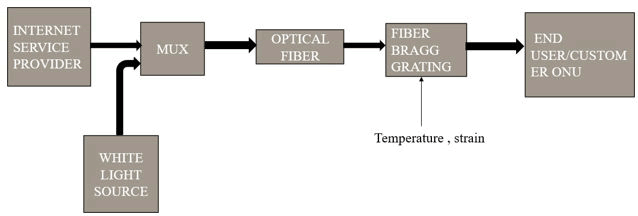
Figure 1: Block diagram of early disaster sensing system.
Optical fiber acts as a path of optical signal and the length of the optical fiber is 20 km. FBGs are employed in line optical fibers as a particular wavelength reflector to obstruct particular wavelengths. The presence of various industrial, biological, and chemical substances, as well as engineering parameters like temperature, strain, pressure, tilt, displacement, acceleration, and load, can all be measured with FBGs, which are regarded as excellent sensor elements. The Refractive Index (RI) of the fiber core is periodically varied in FBGs, a type of distributed Bragg reflector, which is built in a brief segment of the optical fiber to transmit certain wavelengths of light while reflecting others. This produces a wavelength specific dielectric mirror. The customer’s equipment, including computers, routers, and telecommunication devices, can use the Customer ONU to convert optical signals received from the service provider’s Optical Line Terminal (OLT) into electrical signals. By demodulating the optical signals, the digital data that is encoded in them is extracted during the conversion process. To further guarantee the accuracy and integrity of the data delivered to the customer’s location, the ONU may also carry out operations like signal conditioning or amplification.
Using a transmitter, the electrical signal is transformed into an optical form. The resulting optical signal is subsequently transmitted by the transmitter to the optical fiber cable. Flexible devices called connectors are used to link fiber cables that need to be connected and disconnected quickly. By installing attenuators permanently to match transmitter and receiver levels properly, attenuators are used to investigate power level margins. A passive optical device known as a power splitter facilitates the division of a light signal in an optical fiber among two or more fibers. Data connections (point-to-point connections) between two locations are made possible by optical fiber cables. A distributed Bragg reflector of the FBG type is built within a brief optical fiber segment, transmitting certain wavelengths of light while reflecting others. Optical amplifiers play a crucial role in optical communication systems, like those using fiber optic cables to send data across great distances. They work by increasing the intensity of light signals, which, as they pass through the optical fiber, tend to weaken owing to loss. The loss of signal integrity without optical amplifiers would require regular signal regeneration, which is a more involved and expensive procedure than amplification. An optical receiver is a vital part of an optical communication system. Its job is to identify and convert light signals sent through optical fiber into electrical signals that electronic devices can comprehend and process. An optical receiver’s fundamental component is usually a photodetector, such as a photodiode, which transforms the incoming light signal into a tiny electrical current. To reconstruct the transmitted data, electronic circuitry amplifies and processes this current. Since it affects things like sensitivity to low light levels, communication link range, and the rate at which data can be received error-free, an optical receiver’s performance is crucial in determining the overall efficacy and efficiency of a communication system. Modern optical receivers are essential to high-capacity, long-distance optical networks because they use cutting-edge technologies like coherent detection, which combines the received signal with a local laser oscillator to improve sensitivity and data rates. A BER analyzer is used to quantify the signal quality and check if the signal received can be decoded as shown in Figures 2 and 3 [7].
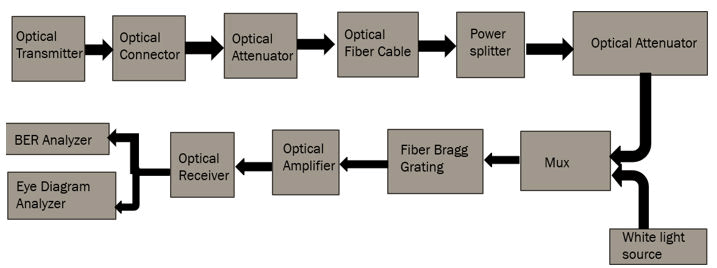
Figure 2: Block diagram of early disaster sensing system in downstream.
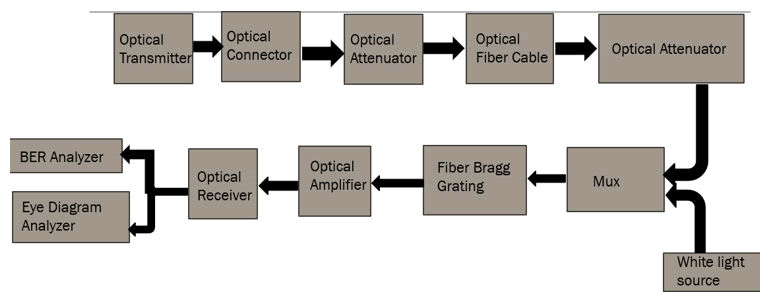
Figure 3: Block diagram of early disaster sensing system in upstream.
Results and Discussion
Utilizing GPON with FBG and OA, developed designs of the early disaster detection system device are built for both upstream and downstream configurations, with a maximum optical fiber length of 20 km, downstream wavelength of 1490 nm, and upstream wavelength of 1310 nm. With the Optisystem simulator 21.0 program, designs are simulated. The schematic diagram of the Early disaster sensing system in upstream and downstream configuration is shown in Figures 4 and 5 under various optical fiber length values and an attenuation coefficient of 0.2 dB/km, the power link budget (dBm), eye diagram, minimum BER (dB), and Q-factor are tested and obtained. The optical fiber cable, optical spectrum analyzers, FBG port terminals, and optical power meters are connected at the input and output ports to measure the transmitted and received power. Using the optical receiver, the optical signal is subsequently transformed into an electrical signal. Eye diagram analyzers are equipped with an optical receiver, which is used to evaluate the minimum BER and Q-factor performance. For one piece of OLT core to be able to distribute as many light signals as possible from 32 ONTs/ONUs at once, the passive splitter in the downstream configuration used an ODC ratio of 1:4. With the use of a passive splitter with a 1:8 ratios, the light signal from one ODP can reach eight ONTs.
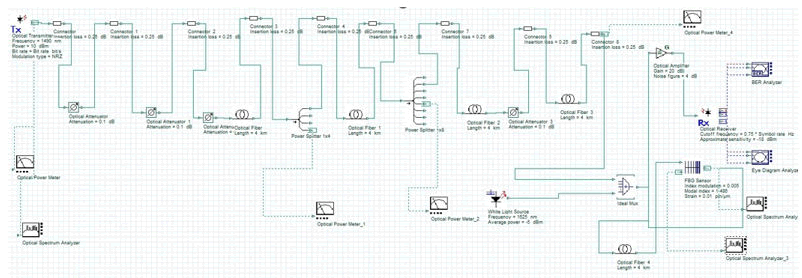
Figure 4: Circuit diagram of early disaster sensing system in downstream.
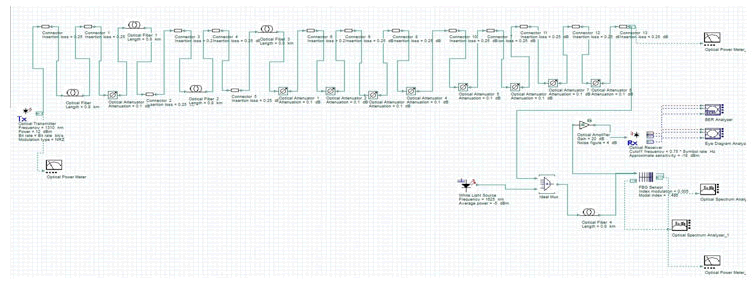
Figure 5: Circuit diagram of early disaster sensing system in upstream.
An increase in temperature causes thermal expansion in an FBG sensor, which modifies the fiber optic’s grating period. A shift in the wavelength of light reflected by the grating results from this physical alteration, which also affects the fiber’s refractive index as shown in Table 1. A temperature shift at the sensor location may be indicated by any change in the reflected wavelength in a downstream configuration, where the sensor is placed away from the light source and signal processing apparatus. A temperature increase can cause some materials to expand or contract, which can alter how light reflects within the fiber.
| Temperature (°C) | Refractive index | Reflected power (Db) | Power difference |
| 10 | 1.492 | 73.399 | |
| 20 | 1.491 | 73.265 | 0.134 |
| 30 | 1.490 | 73.135 | 0.130 |
| 40 | 1,489 | 73.009 | 0.126 |
| 50 | 1.488 | 81.025 | 8.016 |
| 60 | 1.487 | 81.457 | 0.432 |
| 70 | 1.486 | 82.499 | 1.475 |
| 80 | 1.485 | 83.313 | 0.814 |
| 90 | 1.484 | 83.649 | 0.664 |
| 100 | 1.483 | 84.669 | 2.020 |
Table 1: Output result with different temperature values for the downstream configuration.
Temperature variations can be connected with this shift in reflection as shown in Figure 6. The system can notify operators of these changes and enable them to take preventive action before a disaster by detecting increases in reflected power with temperature. Opti System’s sophisticated simulation tools aid accurate modeling of these phenomena. It can forecast how temperature variations will affect the reflected power by simulating the FBG sensor’s response. This is crucial for developing and testing early disaster detection systems, making sure they are reliable and sensitive enough to identify and react to emergencies on time. The relationship between Temperature and reflected power in an optic system is complex, influenced by various factors such as material properties, geometric changes and thermal effects.
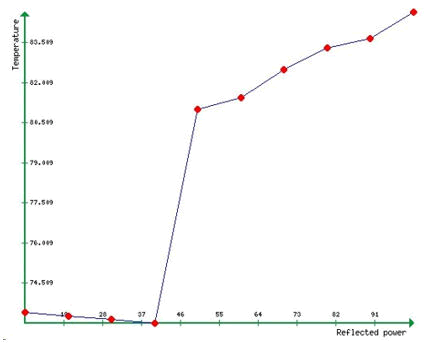
Figure 6: Plot of temperature v/s reflected power.
A Fiber Bragg Grating’s (FBG) reflected power is significantly impacted by strain variations. Fiber Bragg Grating (FBGs) are essential parts of fiber optic sensors that track the condition of structures and can also be used to predict potential structural failures or earthquakes. The wavelength of light that an FBG reflects varies depending on the strain applied to it, which also affects the fiber’s grating period and refractive index as shown in Table 2. A source of light is directed toward the FBG at the far end of the fiber link via an optical fiber in a downstream configuration. Stretching the FBG effectively lengthens the grating period when strain increases as a result of structural or environmental changes [8].
| Strain | Reflected power | Transmitted power |
| 0.005 | 77.762 | 12.957 |
| 0.006 | 79.065 | 12.957 |
| 0.007 | 78.752 | 12.957 |
| 0.008 | 79.203 | 12.957 |
| 0.009 | 78.872 | 12.957 |
| 0.01 | 79.599 | 12.957 |
Table 2: Output result with different strain values for the downstream configuration.
A longer wavelength shift, or redshift, is the result of this stretching in the reflected light. In contrast, the FBG contracts upon relief of strain, resulting in a reduction in the grating period and a blue shift a shortening of the reflected wavelength. Thus, as the match between the reflected wavelength and the source’s transmission wavelength improves, the reflected power seen at the source end varies correspondingly, increasing when the match is better and decreasing when it is less ideal. The monitoring system can identify and measure variations in strain by examining these variations in reflected power. The ability to monitor and react in real-time to changes in structure detected makes this especially helpful for disaster prevention systems. By monitoring the strain in structural components, sensors can provide early warnings of abnormal conditions. For instance, increasing strain values in a dam might indicate a potential for failure long before there are any visible signs is shown in Figure 7. This can prompt early evacuation and preventative measures, potentially saving lives and reducing economic loss. Over time, patterns or anomalies can be found by gathering data and conducting continuous monitoring of strain.
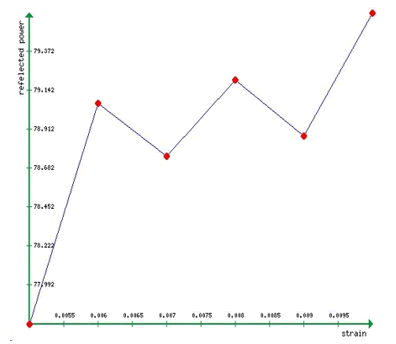
Figure 7: Plot of strain v/s reflected power.
Increased fiber length can frequently result in less attenuation if the system is properly designed, makes use of high-quality components, and incorporates suitable signal regeneration techniques. Longer fiber lengths allow the signal to maintain its strength better, resulting in decreased attenuation per unit length. Using a downstream configuration in Opti System enables the deployment of longer fiber lengths in a disaster detection scenario without the usual increase in attenuation as shown in Table 3. High-performance fiber kinds, like low-loss fibers, and improved signal processing methods can be used to accomplish this.
| Distance (km) | Power transmission (DB) | Receiving power (DB) | Total attenuation (DB) | Power receiving sensitivity | Power margin |
| 2 | 7.397 | -10.625 | 7.077 | -5.680 | 12.319 |
| 4 | 7.397 | -10.945 | 6.950 | -5.553 | 12.447 |
| 6 | 7.397 | -11.265 | 6.826 | -5.429 | 12.571 |
| 8 | 7.397 | -11.505 | 6.738 | -5.341 | 12.659 |
| 10 | 7.397 | -11.905 | 6.590 | -5.193 | 12.807 |
| 12 | 7.397 | -12.225 | 6.478 | -5.081 | 12.919 |
| 14 | 7.397 | -12.545 | 6.368 | -4.971 | 13.029 |
| 16 | 7.397 | -12.865 | 6.250 | -4.853 | 13.147 |
| 18 | 7.397 | -13.185 | 6.148 | -4.751 | 13.249 |
| 20 | 7.397 | -13.505 | 6.050 | -4.653 | 13.347 |
| 22 | 7.397 | -13.825 | 5.944 | -4.547 | 13.453 |
| 24 | 7.397 | -14.145 | 5.842 | -4.445 | 13.555 |
Table 3: Output result with length of fiber values for the downstream configuration.
Lowering attenuation over longer distances is essential because it preserves the integrity of data transmitted, which is necessary for precise and timely detection of possible calamities. Such setups can be designed and simulated with OptiSystem software, a leading tool in optical communication simulation. Researchers and engineers can optimize the system to effectively reduce attenuation by simulating different fiber types, lengths, and configurations. This optimization could entail adjusting the optical signal’s wavelength, adjusting the physical characteristics of the fiber, or better organizing the network’s parts is shown in Figure 8. Greater geography is made possible by the capacity to lengthen fibers while managing attenuation.
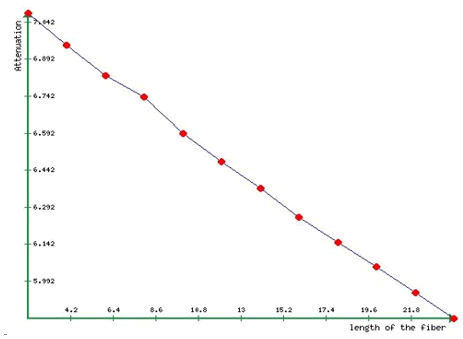
Figure 8: Plot of fiber length v/s attenuation.
Temperature increases the reflected power of FBG alternatively increasing and decreasing as shown in Table 4. In the early stages of disaster detection using the upstream configuration in Opti System, temperature variations and reflected power often exhibit an alternating pattern. This phenomenon arises due to the dynamic interplay between the environmental conditions and the sensing mechanisms employed. Temperature variations can occur when a disaster event like a fire or a structural failure occurs or is about to. occur. These temperature variations can be detected by optical sensors, which are frequently used in upstream configurations. The characteristics of the medium through which optical signals travel may change as a result of temperature increases.
| Temperature (°c) | Refractive index | Reflected power (DB) | Power difference |
| 10 | 1.492 | 52.525 | |
| 20 | 1.491 | 54.186 | 1.661 |
| 30 | 1.490 | 54.955 | 0.769 |
| 40 | 1,489 | 55.851 | 0.896 |
| 50 | 1.488 | 30.083 | 25.768 |
| 60 | 1.487 | 31.284 | 1.201 |
| 70 | 1.486 | 32.728 | 1.444 |
| 80 | 1.485 | 34.509 | 1.781 |
| 90 | 1.484 | 36.792 | 2.283 |
| 100 | 1.483 | 39.919 | 3.127 |
Table 4: Output result with different temperature values for the upstream configuration.
The reflected power that the sensors detect may change as a result of this modification. First, there may be an increase in the reflected power that the optical sensors pick up when the temperature rises. This may be the result of some things, including variations in material properties that alter surface reflectance or thermal expansion. The temperature may, however, begin to drop as the calamity worsens or if there are outside influences such as firefighting operations. As a result, there may be a matching drop in the reflected power that the sensors can measure. The cooling of the surroundings or modifications to the optical characteristics of materials upon their return to ambient conditions could be the cause of this decrease is shown in Figure 9. The temperature and reflected power’s cyclical pattern of increase and decrease can be a valuable early warning system for disasters. Operators can spot anomalous occurrences and respond quickly to reduce risks and guarantee the security of the impacted areas by keeping an eye on these variations over time. This monitoring and analysis can be made easier in the context of OptiSystem.
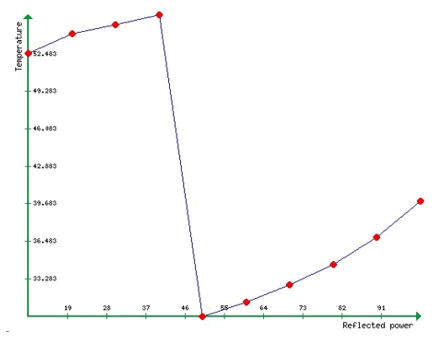
Figure 9: Plot of temperature v/s reflected power.
High strain levels could cause the detection system to become saturated. When a sensor reaches saturation, it stops producing its maximum output and additional strain does not cause the output signal to change proportionately. As a result, even with an increase in strain, the transmitted and reflected power values might seem constant as shown in Table 5. Changes in the environment or infrastructure, such as seismic activity, structural deterioration, or external disturbances, are usually the cause of the increase in strain in early disaster detection in upstream configuration (Opti System). Through sensors built into the infrastructure or the surrounding area, this increase in strain can be identified. The propagation of the optical signal in this setup is such that the reflected power stays relatively constant [8]. The reflected signal undergoes a phase shift as a result of changes in strain, which also impacts the optical path length. That being said, unless the reflective properties of the medium undergo a substantial change, the amplitude of the reflected signal stays relatively constant. Early warning systems are designed to identify and analyze anomalies or possible disasters by monitoring the strain-induced phase changes in the reflected optical signal. This allows for timely intervention or preventive measures. Optical sensing techniques are sensitive and reliable for disaster detection in critical infrastructure scenarios, as demonstrated by this setup [9].
| Strain | Reflected power | Transmitted power |
| 0.005 | 77.762 | 12.957 |
| 0.006 | 79.065 | 12.957 |
| 0.007 | 78.752 | 12.957 |
| 0.008 | 79.203 | 12.957 |
| 0.009 | 78.872 | 12.957 |
| 0.01 | 79.599 | 12.957 |
Table 5: Output result with different strain values for the upstream configuration.
A disaster detection system’s ability to detect events promptly and accurately may be hampered by extending the fiber’s length. This is because longer fibers have the potential to reduce sensitivity, reduce detection range, and increase susceptibility to noise and interference as shown in Table 6. As fiber optic cables get longer, there are more opportunities for the signal to attenuate as it propagates through them. The steady decline in signal strength as it passes through the fiber is referred to as attenuation. Signal intensity decreases more sharply over distance with longer fibers because they have a longer path length for attenuation to take place.
| Distance (km) | Power transmission (Db) | Receiving power (Db) | Total attenuation (Db) |
Power receiving sensitivity | Power margin |
| 2 | 9.403 | 5.047 | 11.352 | -7.949 | 10.051 |
| 4 | 9.403 | 4.679 | 11.678 | -8.275 | 9.725 |
| 6 | 9.403 | 4.315 | 12.028 | -8.625 | 9.375 |
| 8 | 9.403 | 3.949 | 12.41 | -9.007 | 8.993 |
| 10 | 9.403 | 3.588 | 12.83 | -9,427 | 8.573 |
| 12 | 9.403 | 3.231 | 13.282 | -9.879 | 8.121 |
| 14 | 9.403 | 2.874 | 13.788 | -10.385 | 7.615 |
| 16 | 9.403 | 2.521 | 14.362 | -10.959 | 7.041 |
| 18 | 9.403 | 2.175 | 15.004 | -11.601 | 6.399 |
| 20 | 9.403 | 1.828 | 15.75 | -12.347 | 5.653 |
| 22 | 9.403 | 1.482 | 16.658 | -13.255 | 4.745 |
| 24 | 9.403 | 1.144 | 17.794 | -14.391 | 3.609 |
Table 6: Output result with length of fiber values for the upstream configuration.
In upstream disaster detection configurations, longer fiber lengths are frequently required to guarantee thorough coverage because sensors are dispersed over large geographic areas. The system’s capacity to precisely identify and react to early warning signs of disasters may be jeopardized by this extended reach, which exacerbates the effects of attenuation. Further aggravating attenuation, especially in longer fibers, are environmental factors like bends, splices, and contaminants in the fiber. Along the transmission path, these flaws disperse and absorb light, which results in signal loss is shown in Figure 10. In addition, too much attenuation can hinder communication in disaster detection systems, where accurate and fast data transmission is essential for prompt response. The system’s sensitivity to early warning signals may be eventually hampered by it as a result of decreased signal quality, increased noise, and a lower signal-to-noise ratio.
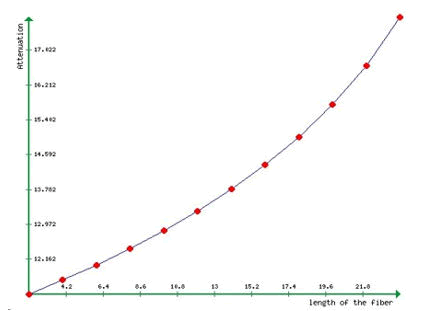
Figure 10: Plot of fiber length v/s attenuation.
Conclusion
Two disasters that are taken into account in the early disaster detection system that uses the FTTH network are temperature and strain. When strain is taken into account, strain increases and reflected power decreases, whereas the reflected power alternately increases and decreases with temperature. Both upstream and downstream of GPON are taken into consideration. Downstream, as temperature rises, reflected power falls, strain increases, reflected power alternately increases and decreases, and attenuation decreases as fiber length increases. In upstream the temperature increases, the reflected power increases and decreases alternatively and strain increases the reflected power remains constant and the attenuation increases against the increase in length of fiber. As a result, the downstream configuration of the disaster sensing system will yield better performance.
References
- Awalia W, Pantjawati A (2018) Performance simulation of fiber to the home (FTTH) devices based on optisystem. IOP Conf Ser Mater Sci Eng 384: 012051. [Google Scholar]
- Zacharias J, Supriya S, Narayanan V (2018) Full-duplex hybrid FTTH and RoF transport system based on polarization modulators. Optik 175: 256–262.
- Caka N, Hulaj A (2011) Optimization of FTTH network in kosovo through the implementation of GPON architecture and analysis of the cost of the implementation. Int J Commun 5:175–182.
- Sadin SI, Billah AB, Ahad MA, Fahim KS, Mitra P, et al. (2022) Design and performance evaluation of a gigabit passive optical network (GPON) through fiber-to-the-home (FTTH) technology. 2022 International Conference on Recent Progresses in Science, Engineering and Technology (ICRPSET), pp. 1–6.
- Adiati R, Kusumawardhani A, Setijono H (2022) Design and analysis of an FTTH-GPON in a residential area. J Phys Educ Technol 8: 228–237.
- Abas A, Rahman M, Ahmad N (2023) The effect of temperature to the reflected signal of PMMA FBG in FTTH network. J Phys Conf Ser 2627: 012009.
- Shabaneh AAA, Melhem M (2022) Execution simulation design of fiber-to-the-home (FTTH) device ingress networks using GPON with FBG based on optisystem. Int J Electron Telecommun 68: 783–791.
- Qureshi MI, Yusoff RM, Hishan SS, Alam AF, Zaman K, et al. (2019) Natural disasters and Malaysian economic growth: policy reforms for disasters management. Environ Sci Pollut Res Int 26:05.
[Crossref] [Google Scholar] [PubMed]
- Jin L, Zhang W, Zhang H, Liu B, Zhao J, et al. (2006) An embedded FBG sensor for simultaneous measurement of stress and temperature. IEEE Photonic Tech Lett 18: 154–156.